Blog / Case Study
Inside the Wallets With a 59% Win Rate — What They're Copying
We track 593 profitable Polymarket addresses with a combined $36.7M in 30-day backtested PNL. The average win rate is 59.44%. Here's what separates these wallets from everyone else.
Fifty-nine percent doesn't sound impressive. Flip a coin, add a little skill, and you're nearly there — right?
Wrong. In prediction markets, the gap between 50% and 59% is the gap between bleeding money and compounding it. Here's what we've learned from tracking 593 of the most profitable wallets on Polymarket.
The dataset
PolyCop continuously monitors profitable Polymarket addresses. The current tracked set:
- 593 wallets identified as consistently profitable
- 59.44% average win rate across all tracked addresses
- $36.7M combined PNL in 30-day backtesting
- $33M in total active balance across tracked wallets
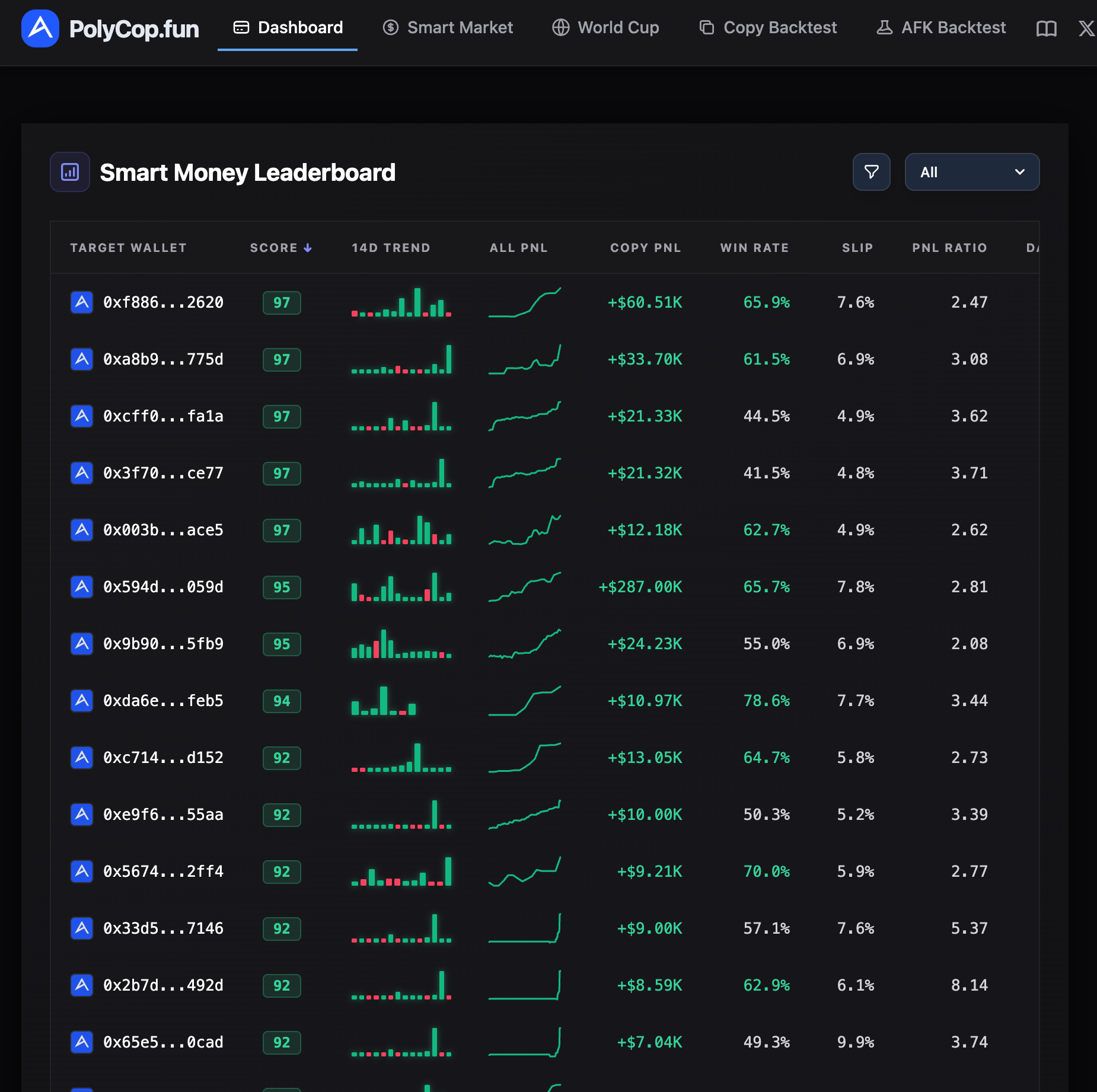
These aren't cherry-picked winners from one lucky month. Wallets enter the tracked set only after demonstrating sustained profitability, and underperformers rotate out.
Why 59% beats 70%
Here's the counterintuitive part: a 59% win rate with disciplined sizing usually outperforms a 70% win rate with poor sizing.
Think about what a very high win rate often means on Polymarket: buying heavy favorites at 85–95¢. You win constantly — until one upset wipes out twenty wins. The math is brutal: winning $5 on each of 19 trades, then losing $95 on the 20th, leaves you exactly at zero.
The 59% wallets play differently. Their typical entry sits in the 35–65¢ range — genuinely uncertain markets where their edge in information or speed pays asymmetrically. Win 59% of coin-flip-priced markets and your expected return per trade is strongly positive, with no single position able to destroy the curve.
Three patterns in the smart money
1. They trade categories, not headlines. The most consistent wallets specialize: live esports, tennis, crypto price markets. They're not chasing whatever's trending on the homepage — they're running the same playbook hundreds of times in a niche they understand.
2. They size flat. Scroll through any top wallet's history and you'll rarely see one position 10x larger than the rest. Conviction betting is for tourists. The smart money treats every trade as one sample in a long series.
3. They're fast. Many edges in live markets last seconds. A team takes the first map in CS2, the odds lag, and the window closes. This speed advantage is precisely why manual copying fails — by the time you've seen the trade and clicked, the price has moved.
How copy trading captures this
The honest pitch for copy trading is narrow: it transfers execution, not just ideas.
When you copy a tracked wallet through the PolyCop bot, every trade mirrors in real time with 0-second execution. The entry price you get is functionally the same one the smart money got — which, in fast markets, is the entire edge.
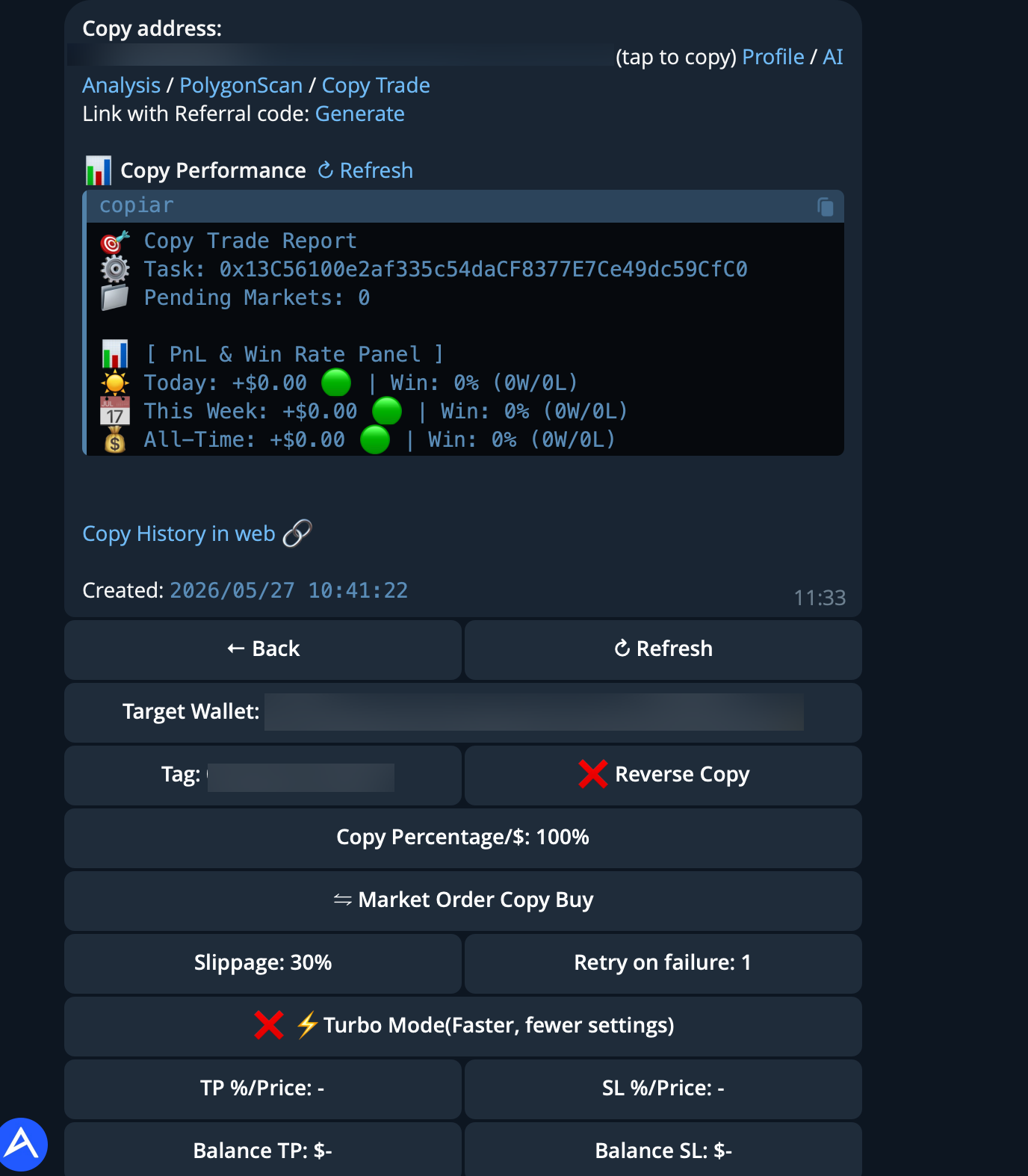
What copy trading does not do is guarantee profit. If the wallet you copy hits a cold streak, you ride it down too. That's why we publish win rates and full history for every tracked address — and why the sensible approach is:
- Filter the leaderboard for wallets with 500+ trades (small samples lie)
- Check that the profit curve is smooth, not driven by one spike
- Allocate small, observe for a week, then scale what works
- Spread across 2–3 wallets in different categories to dilute cold streaks
The takeaway
A 59% win rate is not a marketing number — it's what sustainable edge actually looks like in an efficient market. The traders behind these 593 wallets aren't fortune tellers. They're operators running tight, repetitive, fast playbooks.
You don't need to out-predict them. You just need to be positioned behind the right ones.
Stop betting. Start trading. Browse all 593 tracked wallets on the PolyCop leaderboard.