Blog / Guide
How Does Polymarket Work? A Plain-English Explanation (2026)
Polymarket lets you trade on real-world outcomes using USDC. Here's exactly how the markets work, how money flows, and how to get started in under 10 minutes.
How Does Polymarket Work?
Polymarket is a prediction market. Instead of betting on outcomes through a bookmaker, you buy and sell shares that represent the probability of something happening. If you're right, your shares pay out $1 each. If you're wrong, they pay out $0.
That's the core mechanic. Everything else flows from that.
The Basic Unit: Yes and No Shares
Every market on Polymarket has two sides: Yes and No.
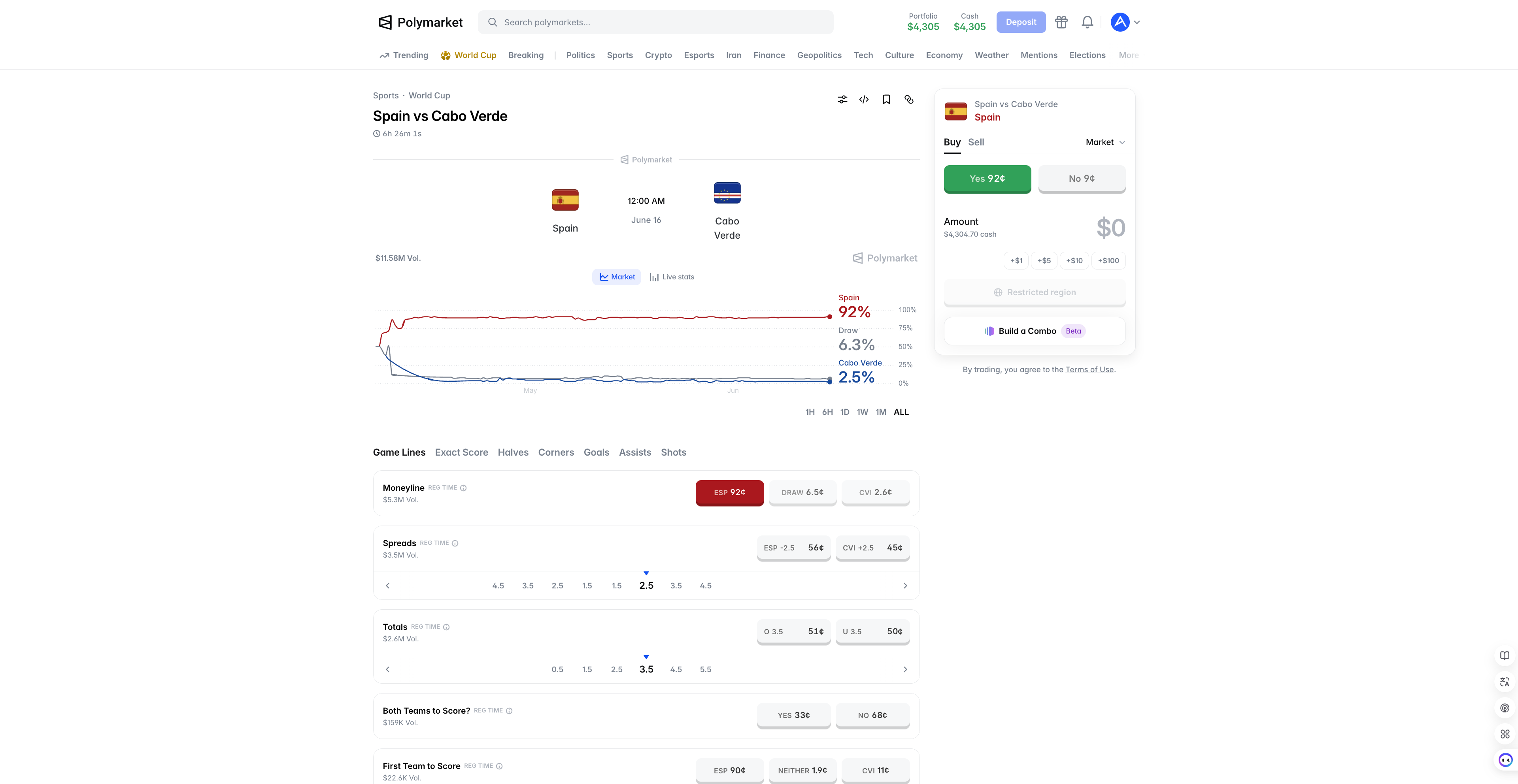
If a market asks "Will France win the 2026 World Cup?" and you think they will, you buy Yes shares. The current price reflects what the crowd thinks the probability is — if Yes shares are trading at $0.16, the market thinks France has a 16% chance.
If France wins, your Yes shares each pay $1. If they don't, they pay $0.
You can also sell your shares before the market resolves — locking in a profit if the price moved in your favor, or cutting a loss if it moved against you.
What Currency Does Polymarket Use?
Polymarket uses USDC — a stablecoin pegged 1:1 to the US dollar. You deposit USDC, trade with USDC, and withdraw USDC. There's no price volatility from the currency itself.
To get started, you need:
- A Polymarket account (email or wallet login)
- USDC on the Polygon network
- A market you want to trade
Register here: polymarket.com
How Are Markets Resolved?
When an event concludes, Polymarket resolves the market using UMA Protocol — a decentralized oracle system. UMA token holders verify the outcome against publicly available information.
If a resolution is disputed, there's a challenge period where anyone can contest it. This process is transparent and on-chain.
Most markets resolve cleanly within 24-48 hours of the event concluding.
How Does Polymarket Make Money?
Polymarket charges a small trading fee on each transaction — typically around 2% of the trade value. There's no spread manipulation or house edge. The platform profits from volume, not from taking positions against traders.
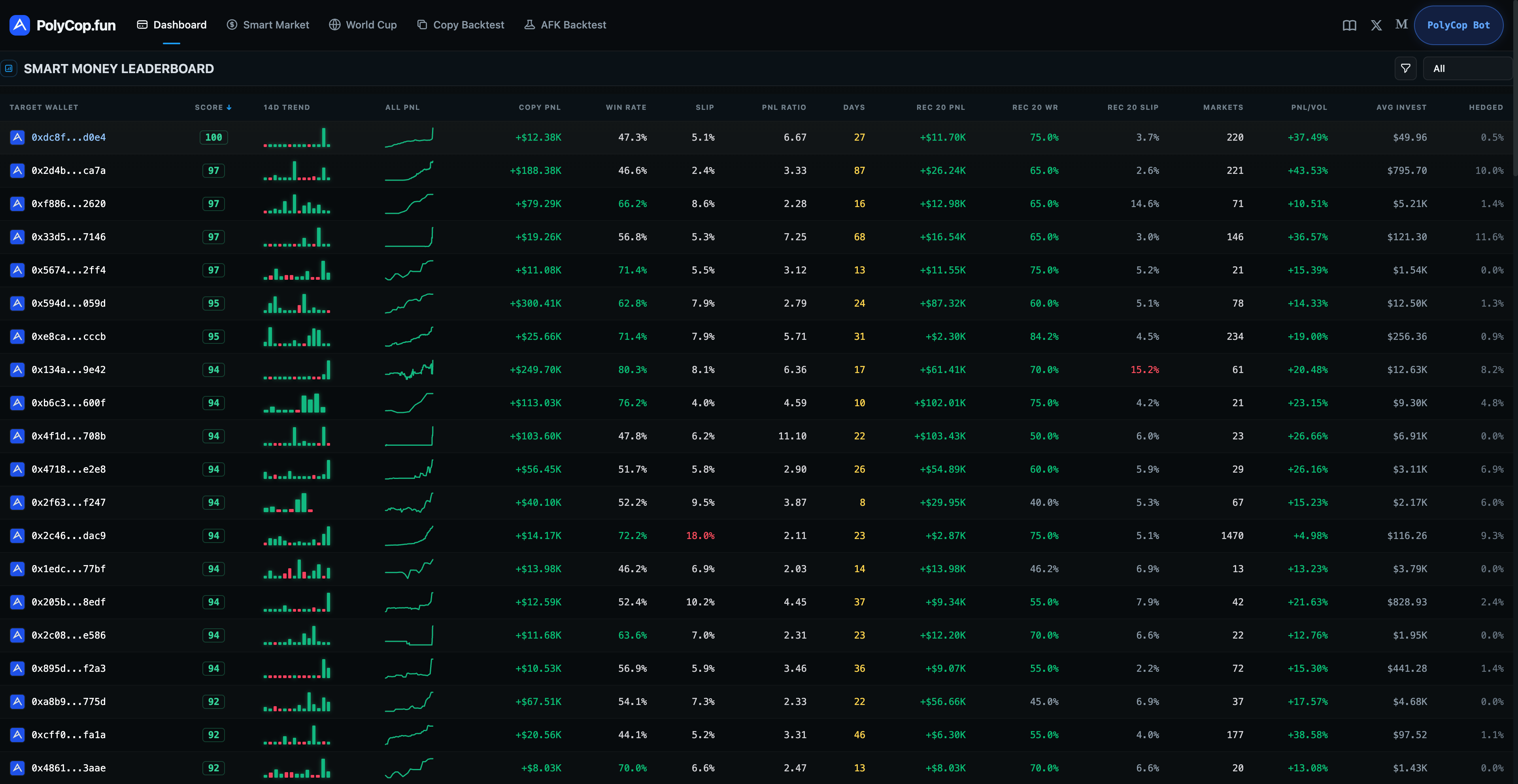
Polymarket has 593 wallets consistently beating the market. PolyCop copies their trades automatically — start here
What Kind of Markets Are Available?
Polymarket runs markets across:
- Politics — elections, policy decisions, leadership changes
- Sports — World Cup, NFL, NBA, UFC outcomes
- Economics — Fed rate decisions, inflation, GDP
- Crypto — ETF approvals, price milestones, protocol upgrades
- Science & Tech — AI model releases, space launches
New markets launch daily. The most active markets often have millions of dollars in liquidity.
How Is Polymarket Different From Betting Sites?
Traditional sportsbooks set the odds. You bet against the house, which always has an edge.
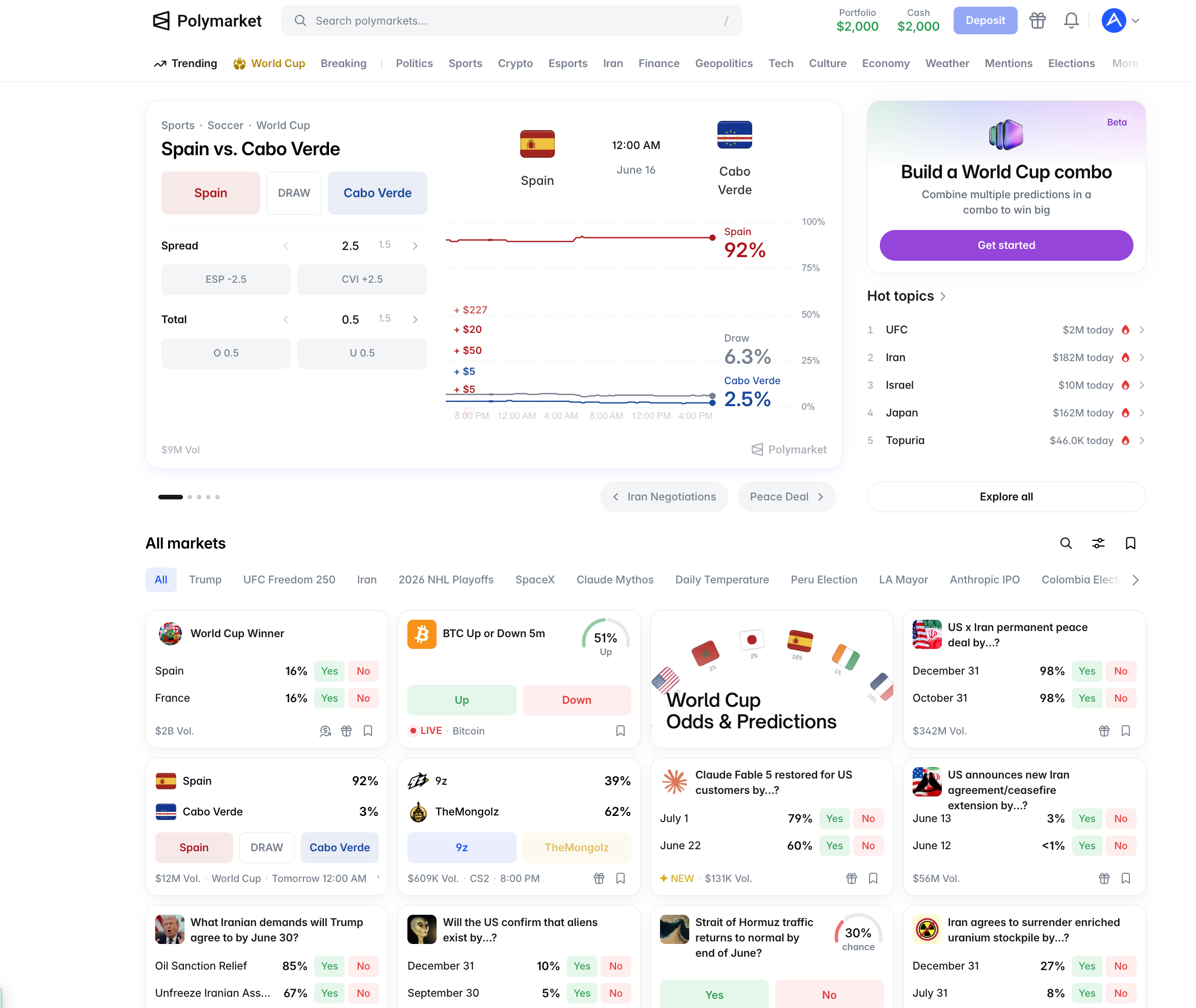
On Polymarket, you trade against other users. The price is set by supply and demand — not by a bookmaker. This means:
- Better prices on well-researched positions
- No account bans for winning too much
- Full transparency — every trade is on-chain
Can You Make Money on Polymarket?
Yes — but it requires an edge. The most consistent performers on Polymarket aren't gamblers, they're researchers who find mispricings between what the market thinks and what the evidence suggests.
PolyCop tracks 593 of these wallets. Their average win rate is 59.44%, with $36.7M in backtested 30-day PNL.
The Fastest Way to Start
If you want to trade Polymarket without spending hours on research, copy trading is the shortcut. PolyCop mirrors the trades of top-performing wallets automatically — 0-second execution, no coding required.