Blog / Guide
How to Read Polymarket & Kalshi Odds (And Copy the Traders Who Get It Right)
Prediction market odds are just probabilities in disguise. Here's how to read them in seconds — and how to skip the guesswork by copying wallets that already read them well.
Unlike traditional sportsbook odds — moneylines, fractional odds, decimal odds — Polymarket and Kalshi both price contracts directly as probabilities. Once you understand this one mechanic, reading either platform becomes almost trivial.
The core mechanic: price = probability
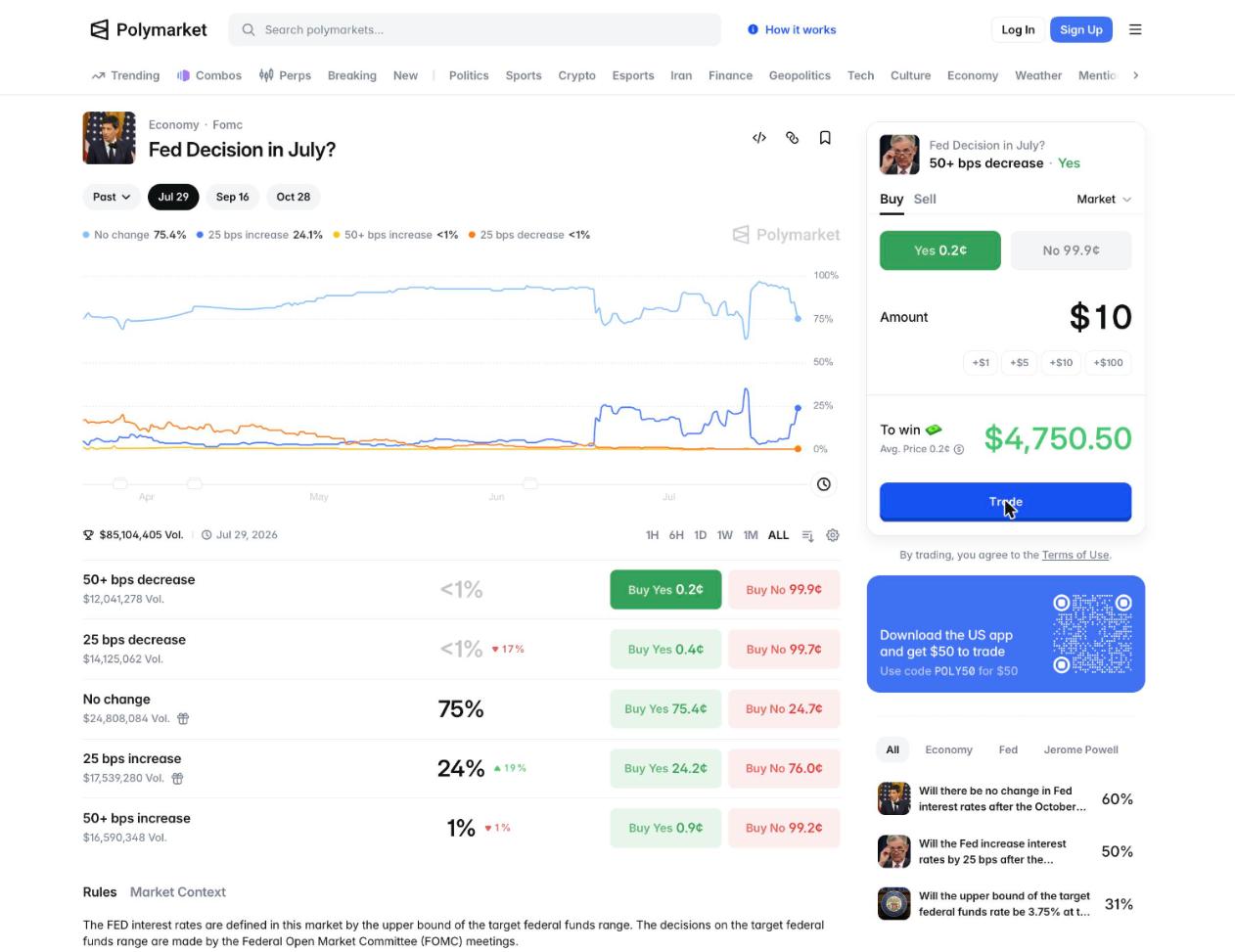
On both platforms, a "Yes" share priced at $0.65 means the market collectively believes there's a 65% chance the event happens. If the event resolves "Yes," that share pays out $1.00. If it resolves "No," it pays out $0. There's no separate odds format to convert — the price you see on the screen is the market's implied probability, expressed as a number between $0.00 and $1.00.
This is different from a sportsbook line like "-150," where you'd need to do a conversion to know the implied probability. Prediction markets skip that step entirely.
Why prices move
Prices move as new information arrives and as traders buy or sell shares. If a piece of news makes an outcome more likely, buyers push the "Yes" price up toward $1.00. If sentiment shifts the other way, the price falls. This means the price chart on any market is effectively a real-time probability chart for that event — which is also why watching how a specific trader's positions move over time can tell you a lot about how well they read incoming information.
Spread and liquidity affect what you actually pay
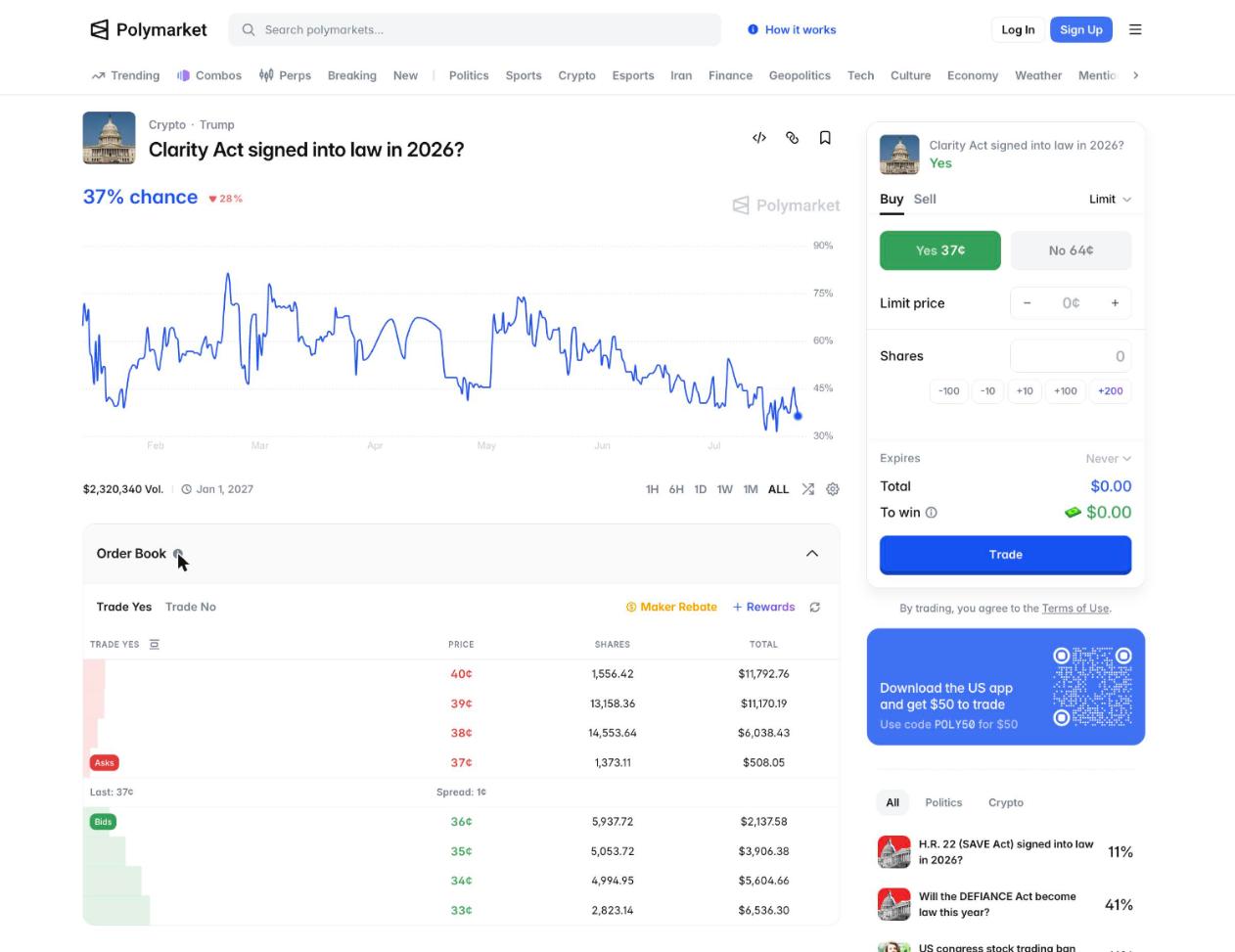
The price you see isn't always the price you'll get, especially on thinner markets. Wide bid-ask spreads mean your actual entry price can differ from the last traded price. Before entering a position — or before copying someone else's position — check the order book depth, not just the headline number.
The hard part isn't reading odds — it's knowing which trader to trust
Reading a price as a probability is the easy part. The harder problem is judgment: is 65% actually a good estimate for this event, or is the market wrong? Professional traders build this judgment over years of tracking specific categories — politics, crypto, sports — and their track record is fully visible on-chain because every Polymarket wallet's trade history is public by design.
That's the entire premise behind copy trading: instead of building that judgment yourself from scratch, you follow wallets that have already demonstrated it, in real money, over time.
How PolyCop turns this into something you can actually act on
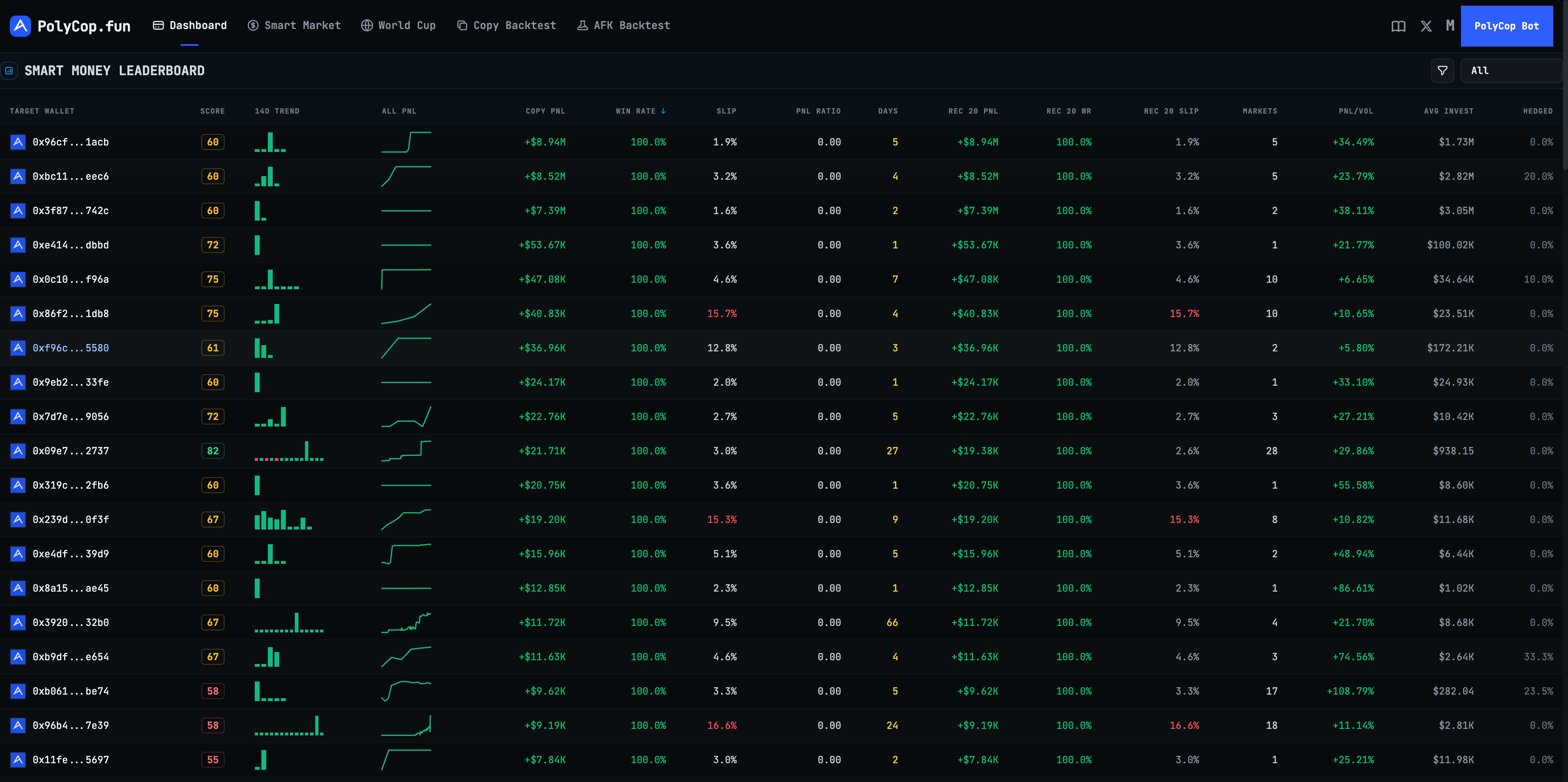
PolyCop's leaderboard ranks Polymarket wallets by realized win rate and profit, so you can see who's actually been right — not just loud on social media. Once you find a trader whose track record and category focus match what you're looking for, the PolyCop Bot mirrors their trades into your own wallet automatically, or runs unattended in AFK mode if you don't want to sit and watch positions open in real time.
Bottom line
Odds on Polymarket and Kalshi are just probabilities with the conversion math already done for you. The real skill is judgment — and copy trading lets you borrow someone else's, transparently, using data that's public for anyone willing to look at it.
---
Browse the leaderboard to find a wallet worth following, then set it up in minutes with the PolyCop Bot.