Blog / Guide
Is Kalshi Legit? A Direct Look at the US Prediction Market
Kalshi is the first CFTC-regulated event contracts exchange in the US. Here's what makes it legitimate, where it falls short, and whether it's right for you.
Is Kalshi Legit?
Yes — Kalshi is fully legitimate. It's the first event contracts exchange in the US to receive CFTC approval, operating under the same regulatory framework as traditional futures exchanges like the CME. If you're in the US and want to trade prediction markets legally, Kalshi is your option.
That said, "legitimate" doesn't mean "best for everyone." Here's the full picture.
What Is Kalshi?
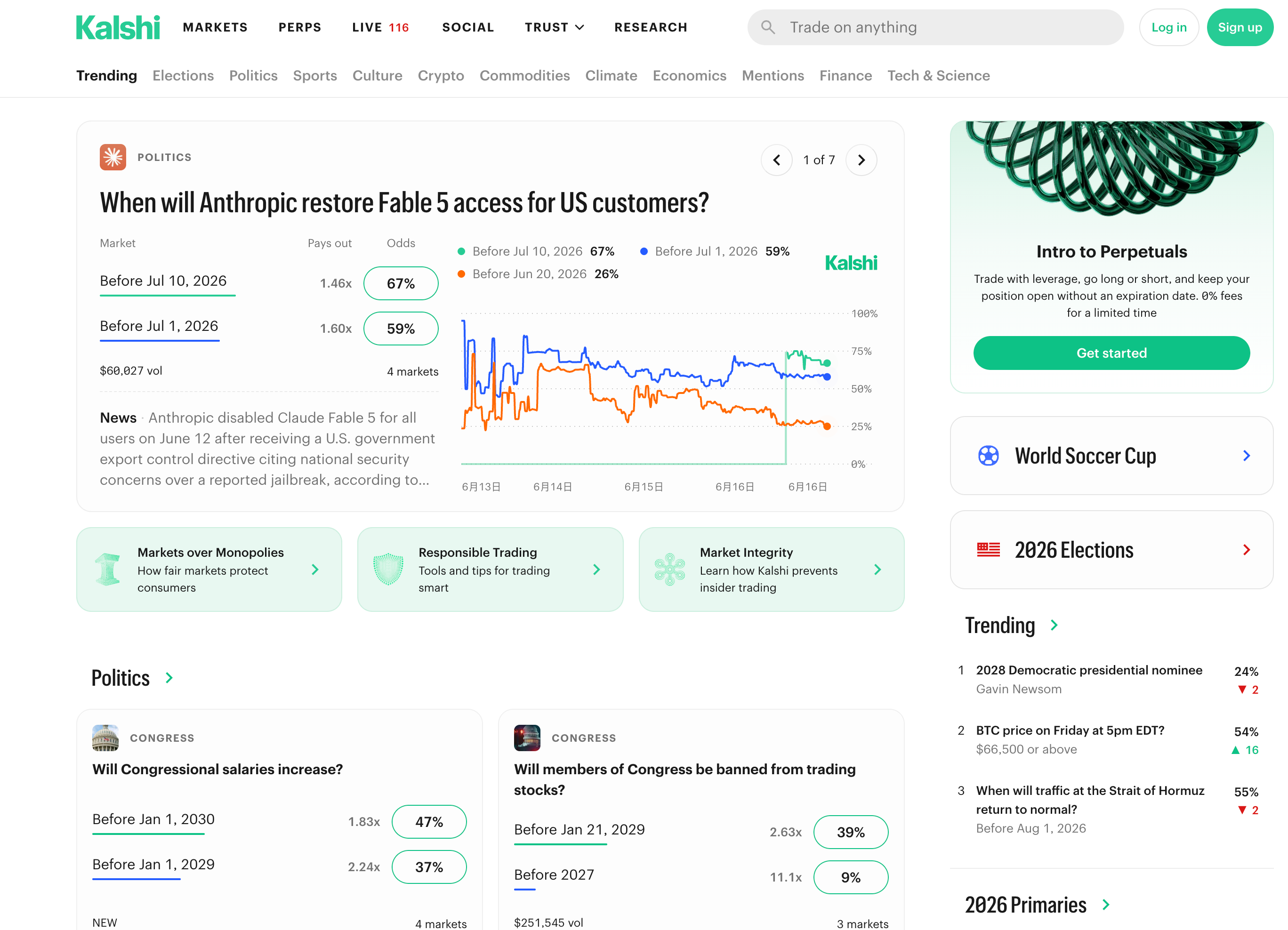
Kalshi is a US-based prediction market platform launched in 2021. Users trade Yes/No contracts on real-world events — elections, economic indicators, weather, sports outcomes. It functions like a traditional exchange, with order books, market makers, and regulated clearing.
The key difference from offshore platforms: Kalshi is the only prediction market in the US that operates with explicit federal approval.
Why Kalshi Is Legitimate
CFTC regulation since 2021. The Commodity Futures Trading Commission designated Kalshi as a Designated Contract Market (DCM). This is the same status held by major futures exchanges. Kalshi is audited, compliant, and operates under federal oversight.
Real money, real settlement. Funds are held in segregated US bank accounts. Withdrawals go to your linked bank via ACH or wire. No crypto wrapper, no offshore custody.
Founders backed by serious institutions. Kalshi was founded by Tarek Mansour and Luana Lopes Lara, MIT-trained traders. Backers include Sequoia Capital, Charles Schwab, and Henry Kravis.
Settled high-profile markets. Kalshi has resolved election markets, Fed rate markets, and economic data markets cleanly and publicly. Track record matters in this space.
How Kalshi Makes Money
Kalshi charges trading fees that vary by market — typically a percentage of winnings rather than a per-trade fee. Fees are higher than on offshore platforms because Kalshi has regulatory compliance, US banking, and customer protection costs.
For US traders, this fee premium buys legal clarity and bank-level safety. For non-US traders, the math usually favors offshore alternatives.
Where Kalshi Falls Short
Limited market selection. Kalshi has fewer markets than offshore competitors. Crypto markets, niche international events, and many sports markets aren't available — partly due to regulatory constraints.
Thinner liquidity. Even on flagship markets, Kalshi's order books are usually 5-20x thinner than Polymarket's. This means wider spreads and worse prices for active traders.
Higher fees. Active traders pay more on Kalshi than they would on an offshore platform.
KYC required. You'll need to verify identity, link a US bank account, and complete tax forms. Easier than opening a brokerage account, but not as frictionless as a wallet connect.
Trading outside the US? Polymarket has 10x the volume and lower fees. PolyCop tracks the most profitable Polymarket wallets and copies them automatically →
Kalshi vs Polymarket: Quick Comparison
Regulation Kalshi: CFTC-regulated, US-legal Polymarket: Not available to US users
Monthly Volume Kalshi: $50-100M Polymarket: $1B+
Fees Kalshi: ~7% on winnings Polymarket: ~2% per trade
Markets Kalshi: US politics, economics, weather, limited sports Polymarket: Global politics, sports, crypto, science, economics
Onboarding Kalshi: KYC + US bank account required Polymarket: Email or wallet, minimal KYC
Who Should Use Kalshi
Best for:
- US residents who want legal prediction market access
- Traders who prioritize regulatory clarity over market variety
- Anyone uncomfortable with crypto or offshore platforms
- Traders focused on US-specific events (elections, Fed decisions, economic data)
Not ideal for:
- Non-US traders (you have better options)
- High-volume active traders (fees eat into returns)
- Crypto, international sports, or global political traders
- Anyone who wants the deepest liquidity available
Is Kalshi Safe With Your Money?
Yes. Funds are held in US banks with FDIC-style protections, segregated from Kalshi's operating capital. The platform is registered with the CFTC and subject to federal audits. Withdrawal processes are standard ACH/wire transfers.
In terms of operational risk, Kalshi is among the safest options in the prediction market space.
What About Tax Reporting?
Kalshi sends 1099 forms for US tax reporting. Profits are typically treated as short-term capital gains (taxed as ordinary income). Offshore platforms don't issue tax documents — you're responsible for self-reporting, which is a hassle but offers more flexibility for international traders.
The Bottom Line
Kalshi is legitimate, safe, and the right choice for US traders who want regulated prediction market access. The trade-offs — higher fees, fewer markets, thinner liquidity — are the cost of operating under US regulation.
If you're outside the US, you almost certainly have better options. Polymarket offers more markets, more liquidity, and lower fees globally.
If you're in the US, Kalshi is the clear choice. There isn't really an alternative.
Want More Markets and Lower Fees?
If you're outside the US, polymarket.com has 10x the volume and 70% lower fees than Kalshi.
And if you don't want to research markets yourself, PolyCop mirrors top Polymarket traders automatically — 593 tracked wallets with 59.44% average win rate.