Blog / Strategy
Kalshi vs Polymarket (2026): Which Prediction Market Should You Use?
Kalshi is regulated in the US. Polymarket has more liquidity and global access. Here's a direct comparison to help you decide which platform fits your trading style.
Kalshi vs Polymarket: The Short Answer
If you're in the US and want full legal clarity, Kalshi is your only option. If you're outside the US and want more liquidity, more markets, and better prices, Polymarket wins.
Here's the full breakdown.
What Is Kalshi?
Kalshi is a regulated prediction market platform based in the United States. It's the first exchange-traded event contracts platform approved by the CFTC, meaning it operates under the same regulatory framework as traditional futures exchanges. US users can trade legally without any VPN or workaround.
What Is Polymarket?
Polymarket is a decentralized prediction market built on the Polygon blockchain. It's the largest prediction market by volume globally — processing over $1 billion in monthly trades. Polymarket is not available to US users following its 2022 CFTC settlement, but is fully accessible everywhere else.
Side-by-Side Comparison
Regulation Kalshi: CFTC-regulated, fully legal in the US Polymarket: Blocked for US users, legal globally
Monthly Volume Kalshi: ~$50-100M Polymarket: $1B+
Market Selection Kalshi: Focused on US politics, economics, weather Polymarket: Global — politics, sports, crypto, science, economics
Fees Kalshi: ~7% on winnings Polymarket: ~2% per trade
Settlement Currency Kalshi: USD (bank transfer) Polymarket: USDC (crypto wallet)
Onboarding Kalshi: KYC required, US bank account Polymarket: Email or wallet, no KYC for most users
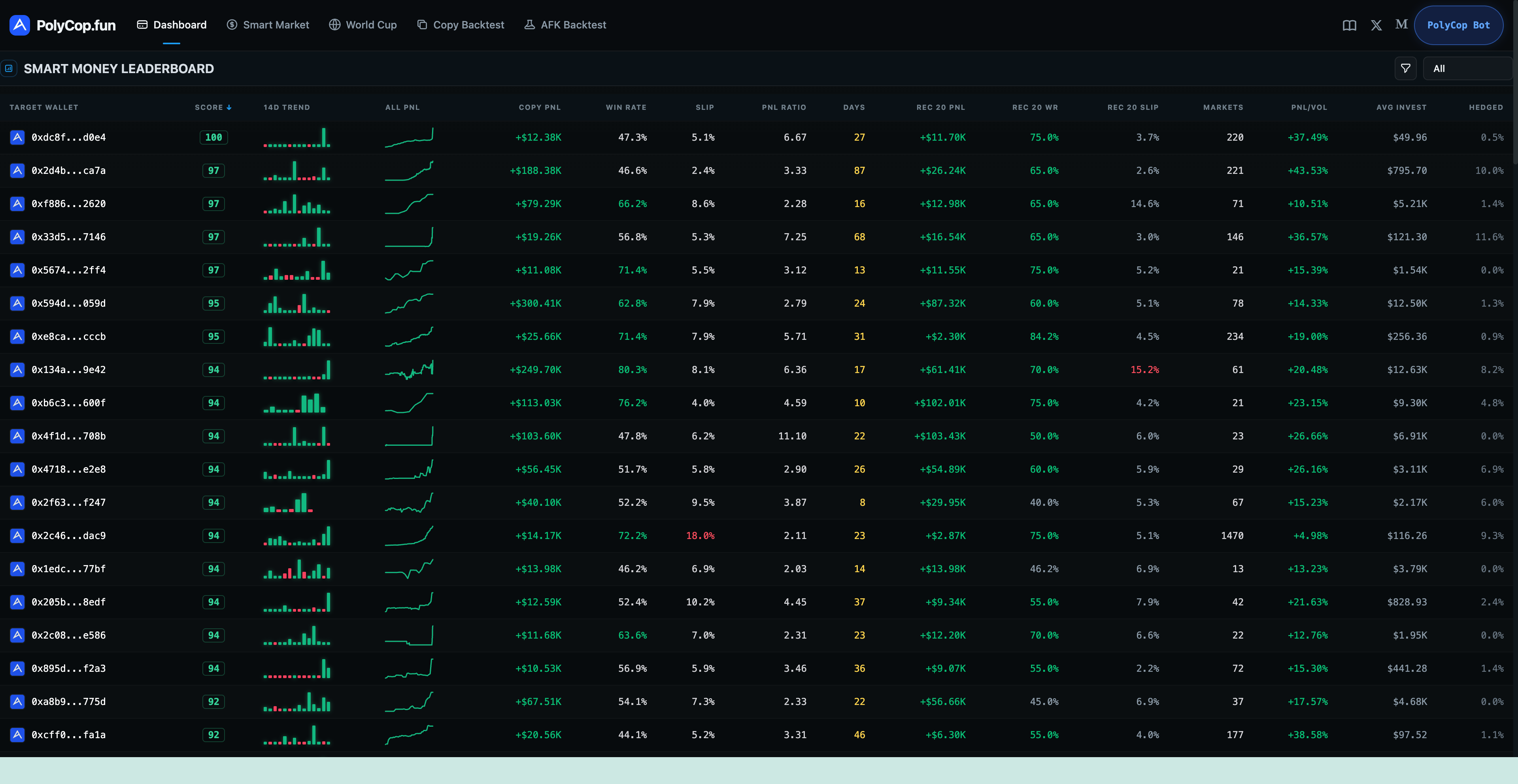
PolyCop tracks 593 profitable Polymarket wallets and copies their trades automatically. Start here →
Where Kalshi Wins
Legal certainty for US traders. If you're American, Kalshi is the only compliant option. No VPN, no grey area, no risk of funds being frozen.
Fiat onramp. Kalshi accepts direct bank transfers. No need to buy crypto first.
Regulatory protection. As a CFTC-regulated exchange, Kalshi has formal dispute resolution and investor protections.
Where Polymarket Wins
Volume and liquidity. Polymarket's order books are 10-20x deeper than Kalshi's. Better prices, less slippage, easier to enter and exit positions.
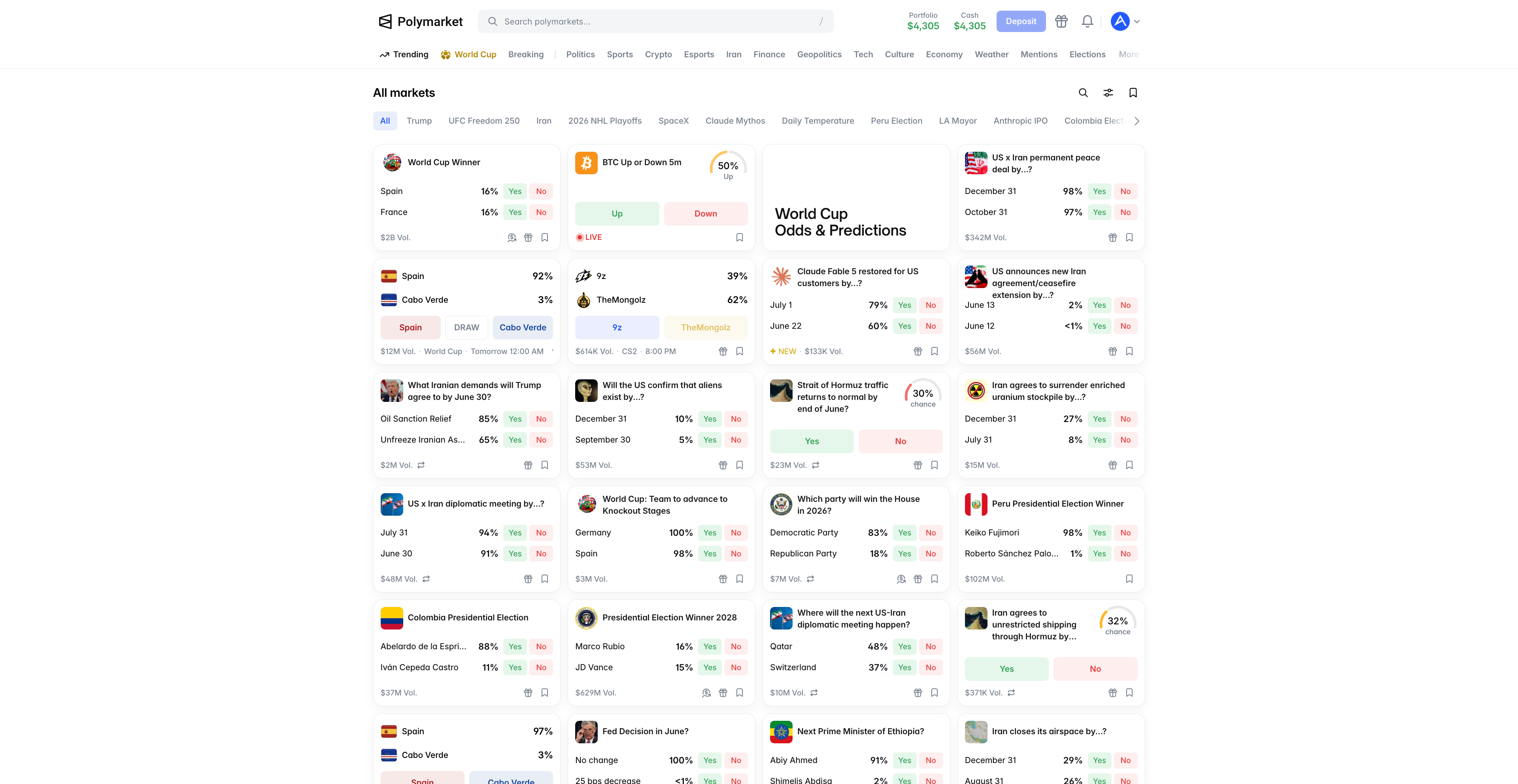
Market variety. Polymarket covers World Cup outcomes, AI model releases, Fed decisions, crypto prices, and hundreds of niche events. Kalshi's market selection is narrower.
Lower fees. At ~2% per trade vs Kalshi's ~7% on winnings, Polymarket is significantly cheaper for active traders.
No KYC for most users. Connect a wallet and start trading in minutes.
Which Platform Has Better Odds?
Generally Polymarket. Higher liquidity means prices more accurately reflect true probabilities. On Kalshi, thinner markets can mean wider spreads and less efficient pricing.
Can You Use Both?
Yes. Some traders use Kalshi for US-specific political markets (where it has more liquidity on domestic events) and Polymarket for everything else. If you're outside the US, Polymarket covers virtually every market Kalshi offers — and more.
The Bottom Line
For non-US traders, Polymarket is the clear choice: more volume, better prices, more markets, lower fees.
For US traders, Kalshi is your legal option — and it's a legitimate platform with real liquidity on key markets.
Start Copy Trading on Polymarket
PolyCop tracks 593 of Polymarket's most profitable wallets — average win rate 59.44%, $36.7M in backtested 30-day PNL. Every trade they make, your bot mirrors automatically.
No coding. No chart-watching. Start in under 10 minutes.