Blog / Strategy
How Polymarket Called the NYC Mayor Race Before Anyone Else
Polymarket predicted Zohran Mamdani's NYC mayoral win weeks before mainstream polls caught up. Here's how smart money positioned early — and what it teaches us about trading political markets.
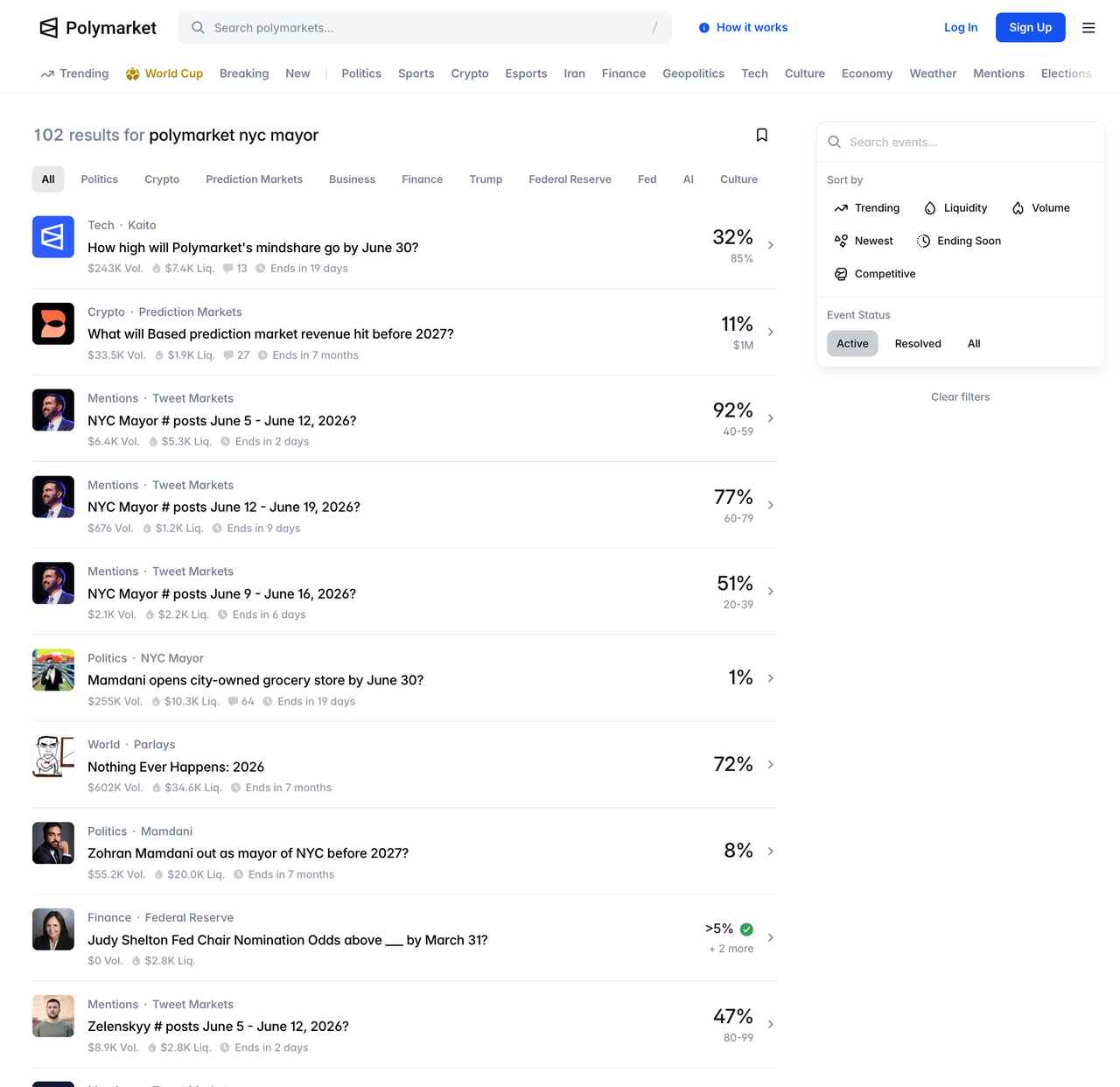
When Zohran Mamdani won the 2025 New York City Democratic mayoral primary, a lot of political analysts were surprised. Polymarket traders weren't. The prediction market had been pricing in a Mamdani win weeks before the final polling averages caught up — and the traders who followed smart money captured the move early.
Here's how it played out, and what it teaches us about trading political markets on Polymarket.
The Race Nobody Saw Coming (Except the Market)
The 2025 NYC Democratic primary featured a crowded field. Early in the race, establishment-aligned candidates led in name recognition and institutional endorsements. Mamdani — a state assembly member with strong grassroots organizing but lower initial polling numbers — was priced as an underdog.
Then something happened that prediction markets are uniquely good at capturing: informed money started moving.
Weeks before mainstream polls reflected it, Mamdani's Polymarket odds began climbing. The traders buying his shares weren't doing it randomly — they had better information, stronger networks, or sharper analysis than the public polling consensus.
How the Odds Moved
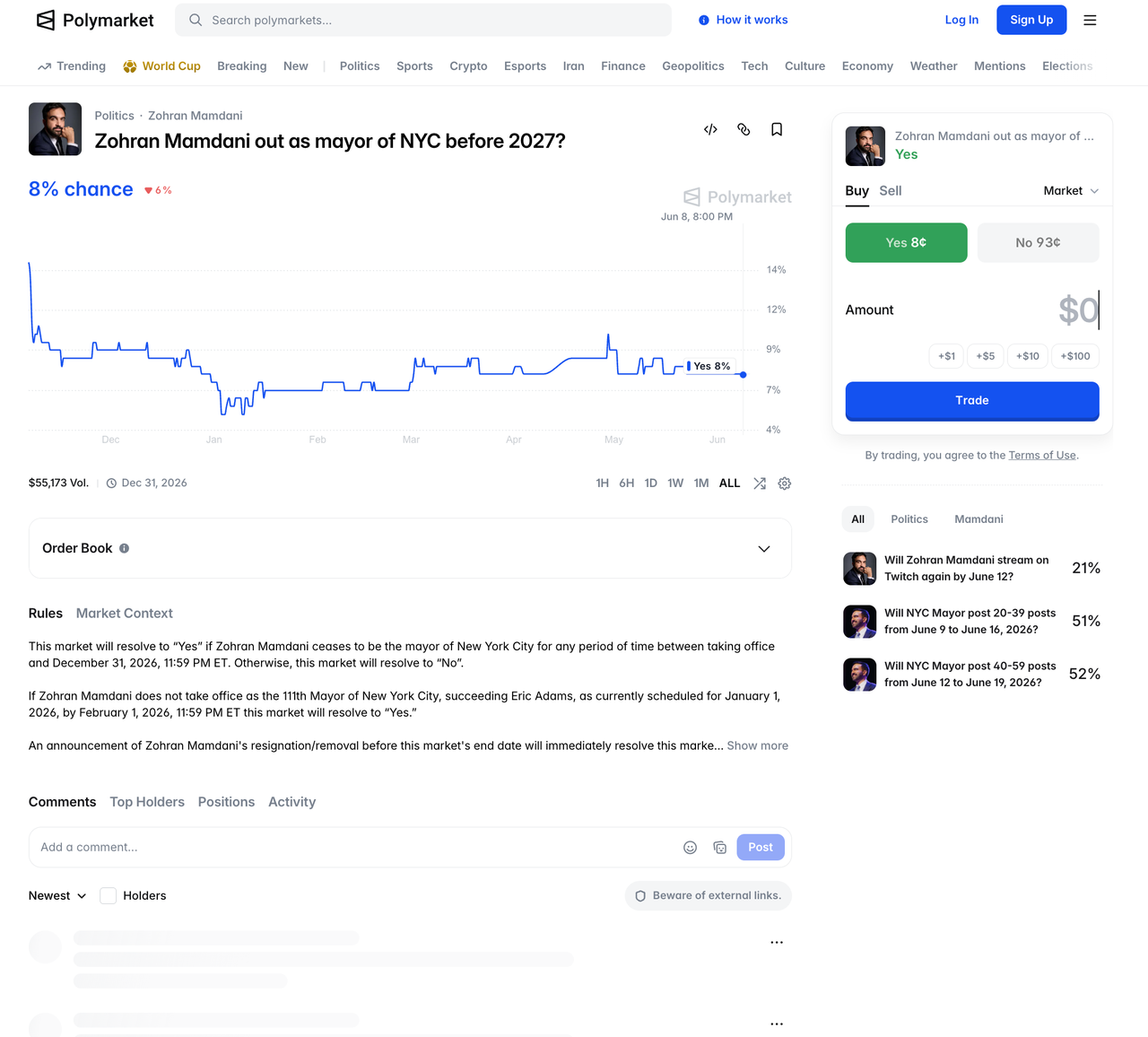
Prediction market prices don't lie — every buy and sell is a real financial commitment. Here's the pattern that played out in the NYC race:
Early phase: Establishment candidates priced at 40-50%. Mamdani trading in the 15-20% range, reflecting his underdog status in public polling.
Middle phase: As endorsements from progressive organizations and labor groups came in, Mamdani's odds began ticking upward. Each endorsement caused an immediate price spike — traders who anticipated these moves positioned in advance.
Final weeks: Smart money accelerated into Mamdani positions. By the time the final polls showed a tightening race, Polymarket had him as the frontrunner. Traders who waited for the polls to confirm what the market already knew had missed most of the move.
Result: Mamdani won the primary. The market called it first.
Why Polymarket Got It Right
Traditional polls measure stated preferences — what people tell a surveyor they'll do. Polymarket measures financial conviction — what people are willing to bet real money on.
The difference matters because:
Polls have no cost to be wrong. A survey respondent who says they'll vote for Candidate A faces zero consequence if they change their mind or stay home. A Polymarket trader who buys Candidate A at 40¢ loses 40 cents per share if they're wrong.
Polymarket aggregates private information. Traders include political operatives, campaign insiders, journalists, and sophisticated analysts — all of whom may have information that hasn't entered the public domain yet. When they act on that information, it shows up in the price.
Prices update instantly. A new endorsement, a leaked internal poll, a viral campaign moment — all of it gets priced within minutes, not days.This is why Polymarket consistently leads mainstream forecasts on political events. The financial incentive to be right forces better analysis.
What Smart Money Was Doing
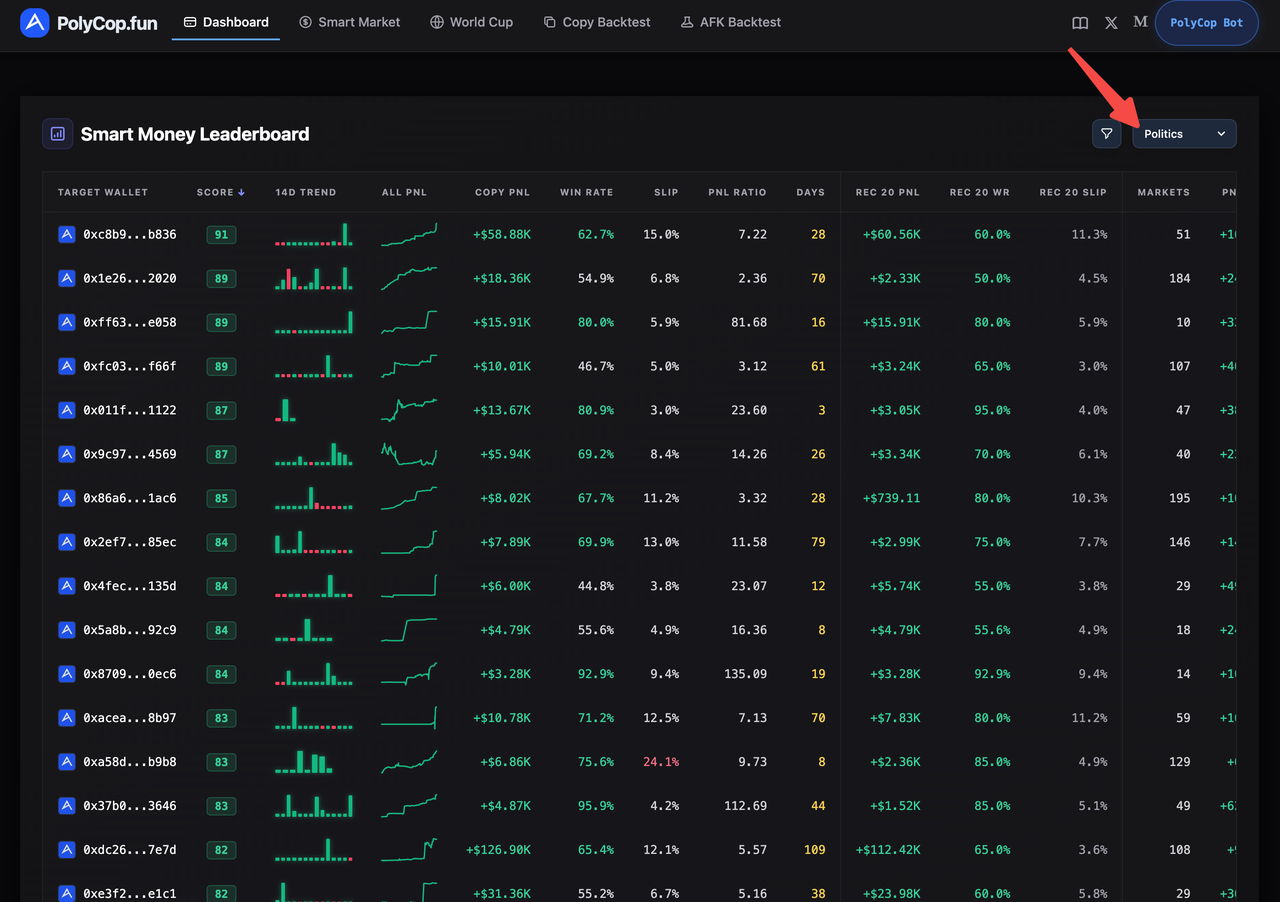
The highest-performing wallets on Polymarket during the NYC race showed a consistent pattern: early entry on Mamdani at underpriced odds, scaled position sizing as confidence grew, and fast exits after major repricing events.
PolyCop tracked these wallets throughout the race. Users who mirrored top-performing wallets captured exposure to the Mamdani move automatically — without needing to analyze primary polling, track endorsement calendars, or monitor the race manually.
How to Trade Political Markets on Polymarket
The NYC race is a template. The same pattern repeats in every competitive political market:
- Smart money moves first The traders with the best information and analysis position early. If you can identify and follow these wallets, you capture the move before the mainstream narrative catches up.
- Endorsements are tradeable events Major endorsements — from labor unions, prominent politicians, or influential organizations — cause immediate price spikes. Anticipating endorsements based on ideological alignment and prior relationships is a real edge.
- Grassroots candidates are systematically underpriced early Name recognition inflates early odds for establishment candidates. Candidates with strong organizing infrastructure but lower media profiles tend to be undervalued in early markets — the NYC race is a textbook example.
- The polling gap is your opportunity When Polymarket odds diverge significantly from public polling averages, one of them is wrong. Historically, the market leads the polls. That gap is where the trading opportunity lives.
Using PolyCop for the Next Political Race
Mamdani is now the Mayor of New York City. The next high-stakes political markets are already open on Polymarket — US Senate races, gubernatorial elections, and international political events with millions in trading volume.
The pattern will repeat: smart money will position early, prices will move before the news catches up, and traders who follow the right wallets will capture the move.
PolyCop lets you follow those wallets automatically. When the wallets you're copying make a political trade, PolyCop mirrors it instantly — 0-second execution, no manual monitoring required.
Start copy trading on Polymarket →
The Broader Lesson
The NYC mayor race is one data point in a consistent pattern: prediction markets outperform traditional forecasting on political events, and the traders with the best track records on Polymarket tend to position before the mainstream consensus shifts.
Following smart money isn't about knowing who will win. It's about knowing who knows who will win — and getting there first.