Blog / Guide
Polymarket Fees Explained: What You Actually Pay to Trade
Does Polymarket charge fees? Yes — but probably less than you think. Here's the full breakdown of every cost you'll encounter, from trading to gas to withdrawals.
Polymarket Fees Explained
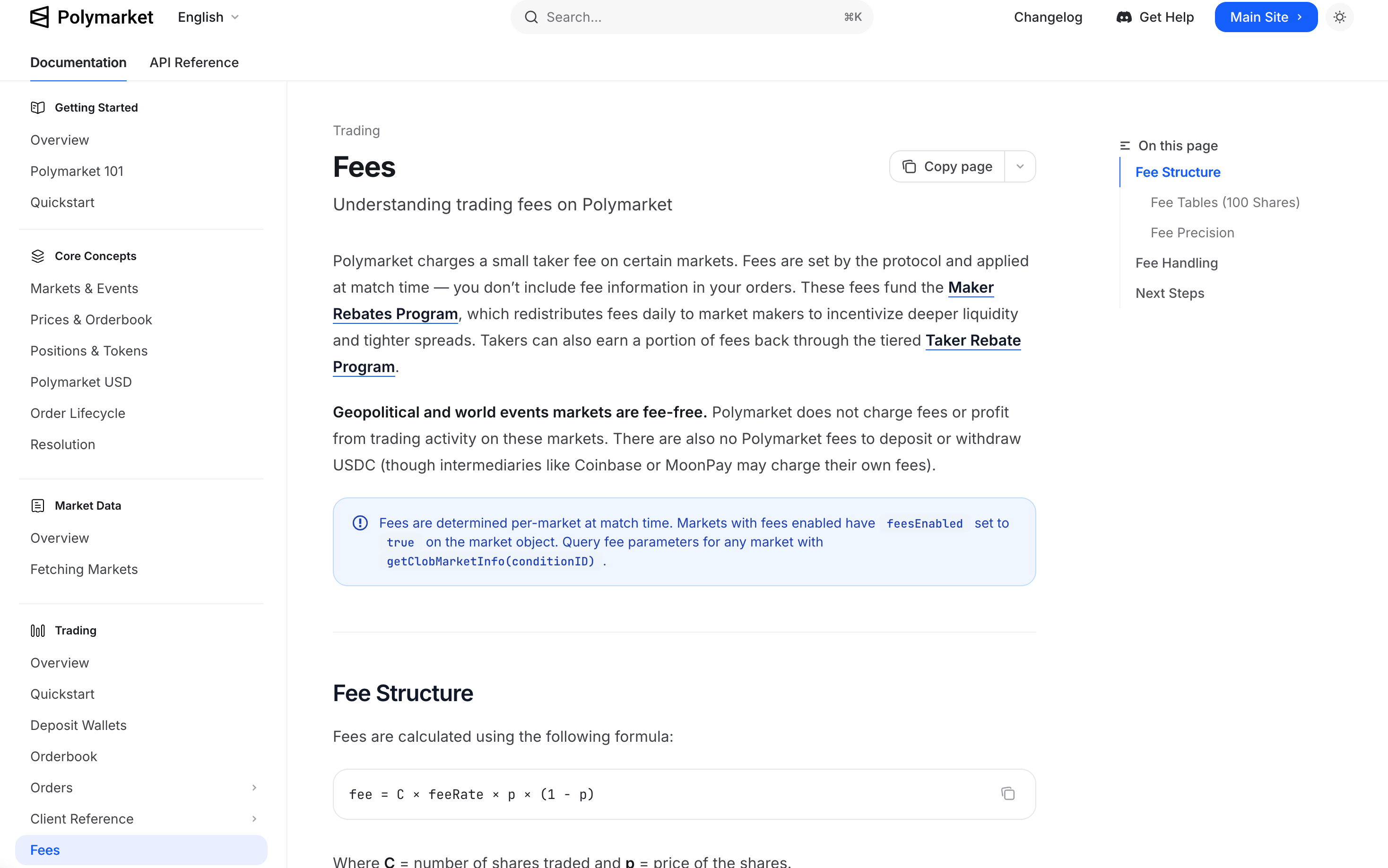
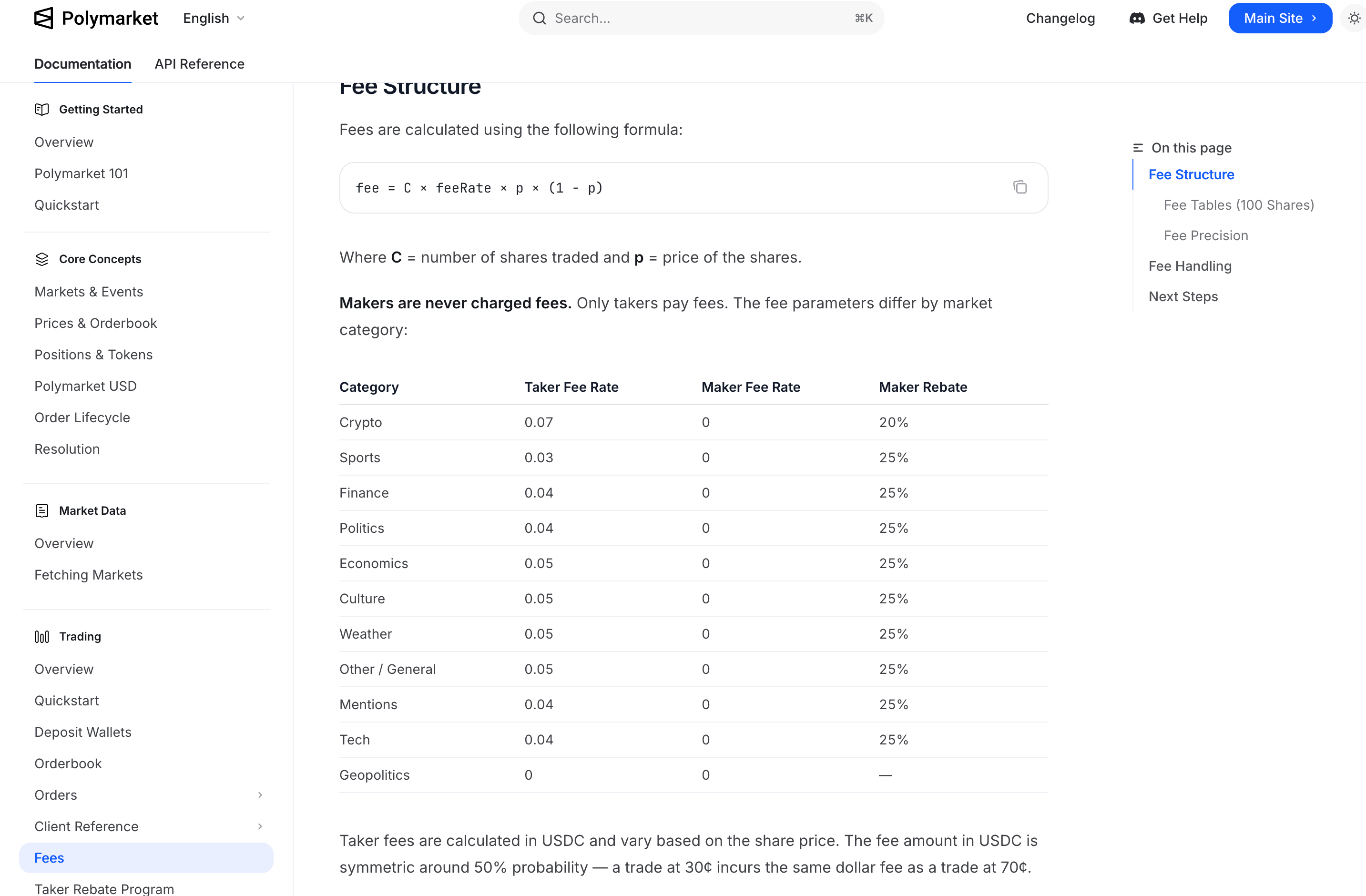
Polymarket charges a small trading fee on each transaction — typically around 2% of trade value. There are no deposit fees, no withdrawal fees from Polymarket itself, and gas costs on Polygon are fractions of a cent. Compared to traditional sportsbooks (5-10% house edge) or Kalshi (~7% on winnings), Polymarket is one of the cheapest ways to trade prediction markets.
Here's everything you'll actually pay.
The Trading Fee
When you buy or sell shares on Polymarket, a small fee is deducted from your trade. The exact rate varies slightly by market and order size, but the standard is around 2%.
A few key points about how it works:
- The fee is on trade value, not on profit. A $100 trade costs about $2 in fees regardless of outcome.
- Fees apply to both buys and sells. If you enter and exit a position, you pay twice.
- The fee goes to Polymarket, not to the other side of your trade. There's no house edge built into prices.
What Polymarket Does NOT Charge For
Deposits. Putting USDC into your Polymarket account is free. You pay only Polygon network gas (cents).
Withdrawals. Polymarket itself doesn't charge a withdrawal fee. You pay Polygon network gas to move funds.
Account creation. No setup fees, monthly fees, or maintenance fees.
Inactivity. Unlike some platforms, Polymarket doesn't penalize you for not trading.
Gas Fees on Polygon
Polymarket runs on the Polygon network, which makes gas fees negligible. A typical trade costs less than $0.01 in gas. Withdrawals are similarly cheap.
If you've used Ethereum mainnet before, you'll find Polygon transaction costs essentially invisible. This is a major reason Polymarket chose Polygon over Ethereum — it makes small trades economically viable.
Hidden Costs to Watch For
1. Spread on thin markets. Some markets have wide bid-ask spreads. If you trade with market orders on a thin market, you might pay $0.62 to buy when the fair price is $0.58. That's a 7% effective cost, not 2%.
Solution: Use limit orders on thin markets, or stick to markets with deep order books.
2. Slippage on large orders. If you place a $5000 order on a market with $2000 of available liquidity, you'll walk through multiple price levels and get a worse average price.
Solution: Break large orders into smaller pieces, or check liquidity before sizing up.
3. Currency conversion (if you're funding with fiat). Polymarket's debit card onramp adds a fee on top of trading fees — often 3-5%. If you're funding from an exchange instead, you skip this.
Solution: Buy USDC on a major exchange (Coinbase, Kraken) and transfer to Polymarket on the Polygon network.
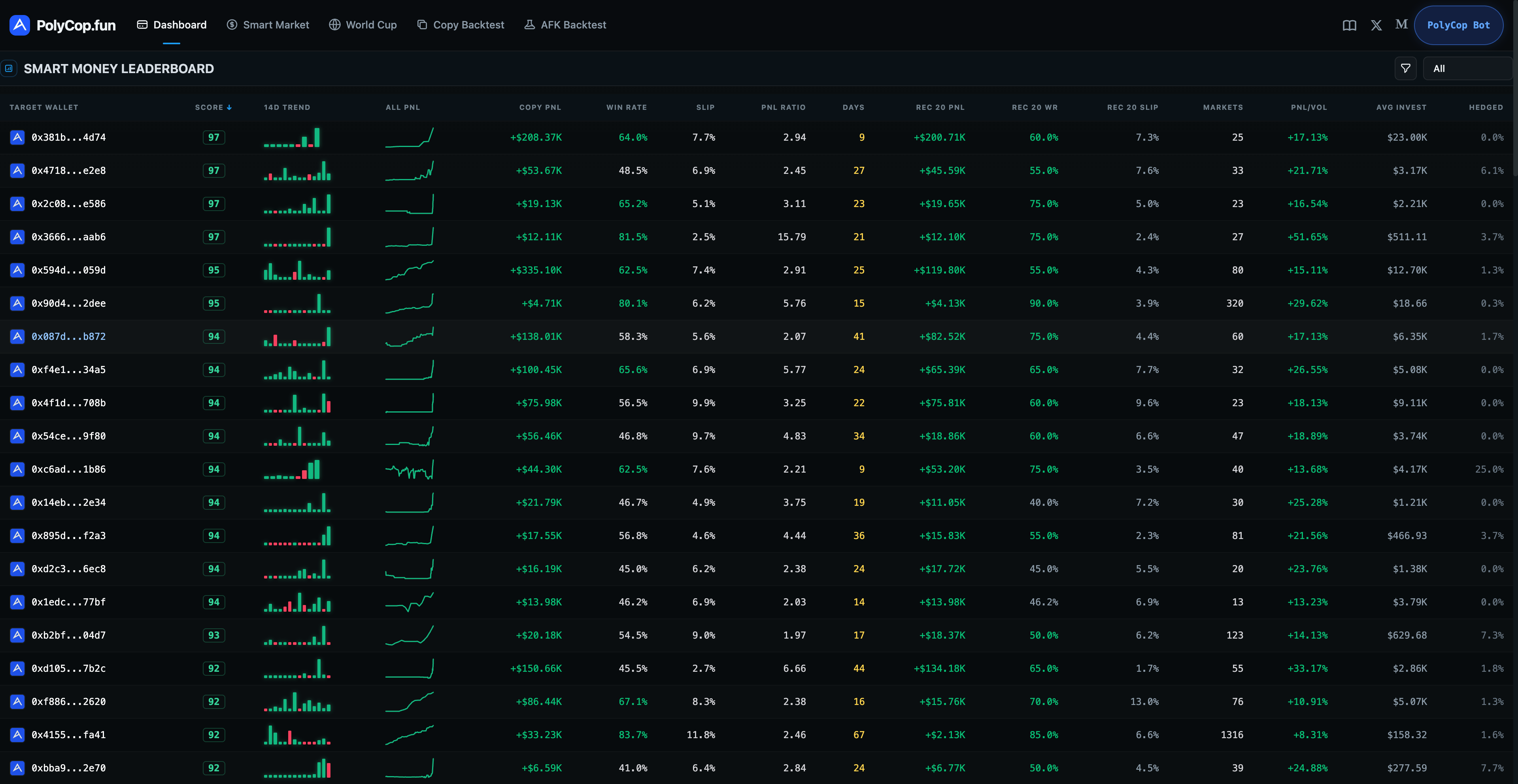
Want to skip the fee math and just copy proven winners? PolyCop tracks profitable Polymarket wallets and mirrors them automatically →
How Polymarket Fees Compare
Polymarket: ~2% per trade Kalshi: ~7% on winnings only Traditional sportsbooks: 5-10% built into odds (the "vig") Crypto exchanges (spot trading): 0.1-0.5% per trade
Polymarket is significantly cheaper than traditional betting platforms, comparable to or slightly more expensive than spot crypto trading, and much cheaper than its main regulated competitor (Kalshi).
For active traders, this fee difference compounds quickly. A trader doing 50 trades per month at $500 average size pays:
- Polymarket: ~$500/month in fees
- Kalshi: ~$1750/month equivalent (on winnings)
- Sportsbook equivalent: $1250-2500/month built into odds
Why Polymarket's Fee Model Works
Because Polymarket earns from trading volume rather than outcomes, the platform has no incentive to manipulate markets or work against you. A bookmaker wants you to lose. Polymarket just wants you to trade.
This creates a structurally fairer environment:
- No odds adjustments to favor the house
- No account restrictions for winning consistently
- No hidden fees inside the prices themselves
The 2% fee is your only real cost. To be profitable, your edge needs to exceed that — but on a platform with no built-in house edge, finding that 2% edge is dramatically easier than on a traditional sportsbook.
How to Minimize Your Total Cost
1. Use limit orders on thin markets to avoid spread costs.
2. Fund with USDC transfers, not card payments, to skip 3-5% conversion fees.
3. Trade larger, less frequently. The 2% fee compounds with trade count. 10 trades at $1000 cost less than 100 trades at $100.
4. Avoid markets with low liquidity unless you have strong conviction. Bad fills can cost you 5-10% even with low platform fees.
5. Consider copy trading — PolyCop's tracked wallets average 59.44% win rates, meaning the 2% fee is easily absorbed by edge.
The Bottom Line
Polymarket fees are real but reasonable. ~2% per trade is among the lowest in the prediction market space, and far below what traditional sportsbooks charge invisibly through odds manipulation.
If you're an active trader, fees matter. Trade in markets with deep liquidity, use limit orders when possible, and fund with USDC transfers rather than card payments. Your net cost stays close to the headline 2%.
If you don't want to think about fees at all, copy trading absorbs them through wallet performance — proven profitable wallets stay profitable after fees.
Start Trading on Polymarket
Ready to trade? Register at polymarket.com and fund with USDC on Polygon.
If you want to skip research and copy proven winners, PolyCop mirrors top Polymarket wallets automatically — 0-second execution, 593 verified profitable traders, no coding required.