Blog / Guide
Polymarket API + Kalshi API: A Developer's Guide (2026)
Both Polymarket and Kalshi expose public APIs for market data and trading. Here's how they're structured, what you can build with them, and where they differ.
If you're building anything on top of prediction markets — a dashboard, a bot, an analytics tool — both Polymarket and Kalshi give you a way in through public APIs. They're structured differently because they're built on different underlying systems: Polymarket is on-chain, Kalshi is a traditional regulated exchange with a REST API layer.
Polymarket API: on-chain first
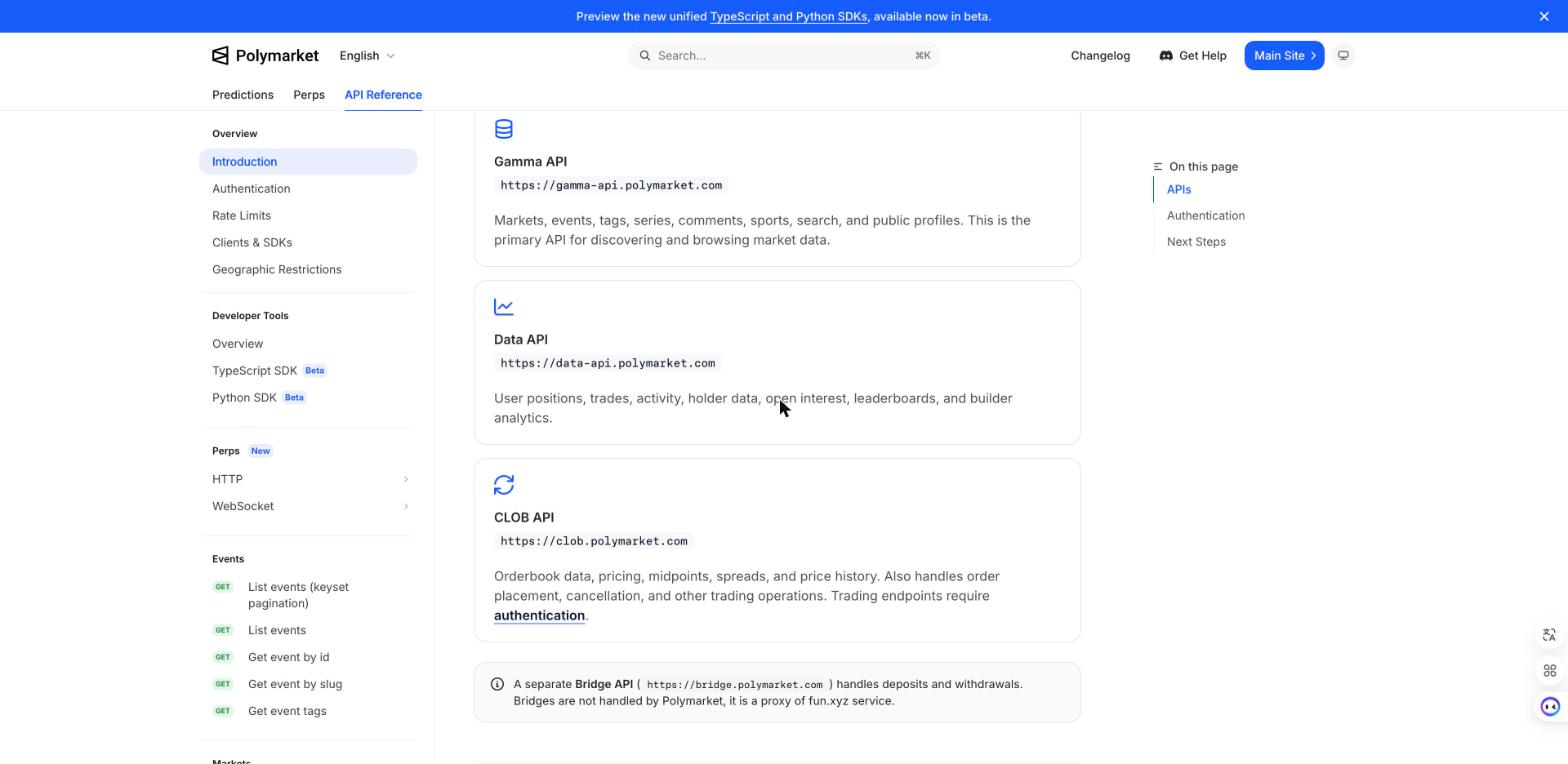
Polymarket's data and trading infrastructure is built around the CLOB (Central Limit Order Book) API, which lets you pull live order books, market metadata, and price history, and place orders programmatically. Because settlement happens on Polygon, on-chain data — trades, positions, wallet activity — is also directly queryable through the blockchain itself, independent of Polymarket's own API. This is what makes tools like wallet leaderboards and copy trading bots possible: the data isn't gatekept behind a single API, it's public on-chain.
Key things to know: - Authentication for trading uses wallet signatures rather than a traditional API key/secret pair - Market data endpoints are generally public and don't require authentication to read - Rate limits apply and scale with usage tier
Kalshi API: traditional exchange model
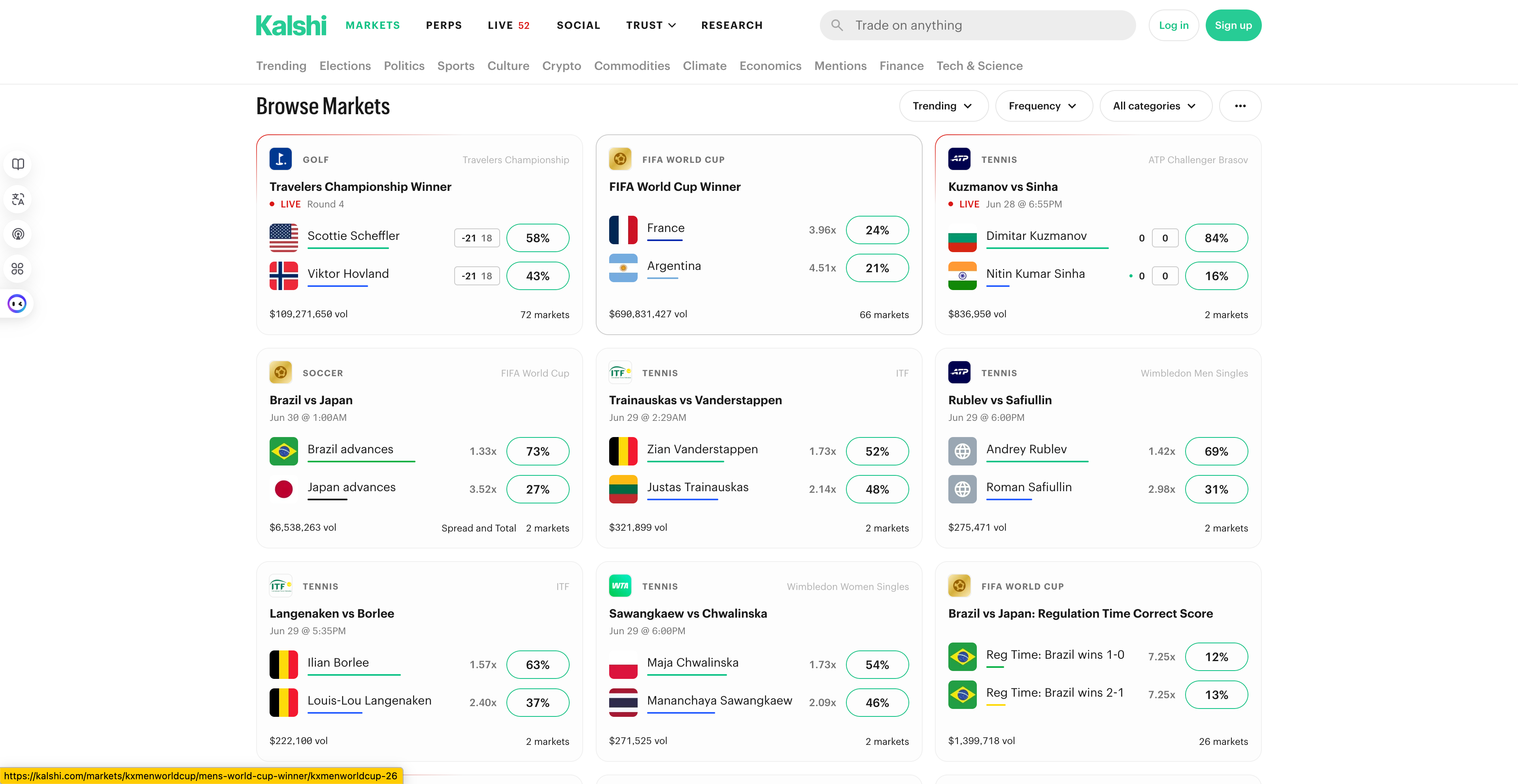
Kalshi's API follows a more conventional brokerage/exchange pattern — API keys for authentication, REST endpoints for market data, order placement, and account management. If you've worked with a traditional brokerage or exchange API before, Kalshi's structure will feel familiar. It covers market listings, order books, trade history, and portfolio endpoints.
Key things to know: - Requires a Kalshi account and API key generation through account settings - Standard REST/JSON request-response pattern - Rate limits and permissions tied to account type
What you can actually build
On Polymarket: - Wallet-level performance trackers (win rate, PNL, position history) — since all trades are on-chain - Copy trading bots that mirror a target wallet's positions - Market-making or arbitrage tools using CLOB order book data
On Kalshi: - Portfolio and P&L tracking tools within a single regulated account - Automated trading strategies against Kalshi's order book - Market data dashboards for economic-indicator and election contracts
The biggest structural difference for builders: Polymarket's on-chain nature means you can build tools that observe *any* wallet's activity, not just your own. Kalshi's account-based model generally limits you to your own account's data unless a market is explicitly public.
Where PolyCop fits in
PolyCop is built on top of Polymarket's on-chain data and CLOB infrastructure — that's specifically what makes wallet-level copy trading possible on Polymarket in a way that isn't structurally available on Kalshi today. If you're a developer curious about the mechanics, our leaderboard is a live example of what on-chain wallet data looks like when surfaced publicly.
Bottom line
Polymarket's API and on-chain settlement make it the more open platform for third-party tools that read *other* wallets' activity. Kalshi's API is a solid, familiar choice if you're building account-scoped trading or portfolio tools within a regulated exchange framework.
---
See what's possible with public Polymarket wallet data on the leaderboard, or automate your own trades with the PolyCop Bot.