Blog / Strategy
Polymarket vs Kalshi (2026): Which Prediction Market Should You Use?
Polymarket and Kalshi both let you trade on real-world events — but they differ on regulation, liquidity, and who can access them. Here's the full 2026 breakdown.
Polymarket and Kalshi are the two largest prediction markets available in 2026, but they're built on fundamentally different foundations. Kalshi is a CFTC-regulated exchange available to U.S. residents. Polymarket operates on-chain, is available globally, and has historically restricted direct access for U.S. users. If you're deciding where to trade, the choice mostly comes down to where you live, how much liquidity you need, and whether you want to trade on-chain.
The core difference: regulation and access
Kalshi is registered with the U.S. Commodity Futures Trading Commission, which makes it the only one of the two platforms U.S. residents can access directly with a regulated brokerage-style account. Polymarket runs on Polygon and settles trades in USDC. It has broader global reach and a larger, more diverse set of markets, but U.S. residents have faced access restrictions that have shifted over time depending on regulatory developments — worth checking current status before assuming either way.
Liquidity and market depth
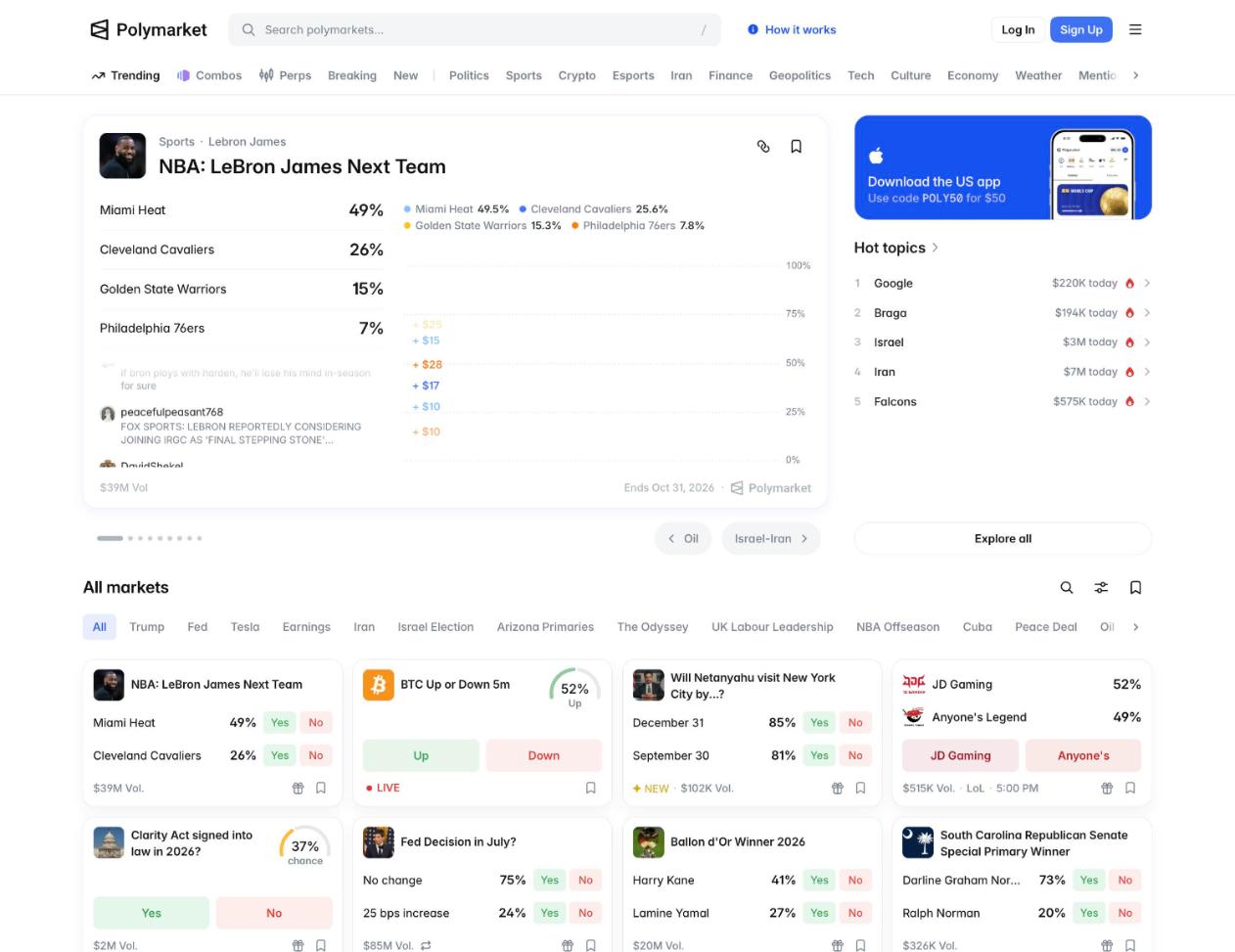
Polymarket generally carries deeper liquidity on political and cultural events, driven by a larger and more crypto-native user base. Kalshi has been growing quickly in sports and economic-indicator markets, backed by traditional finance connections. If you're trying to enter or exit a large position without moving the price, check the order book on the specific market you care about — liquidity varies a lot by category and isn't uniform across either platform.
Fee structure
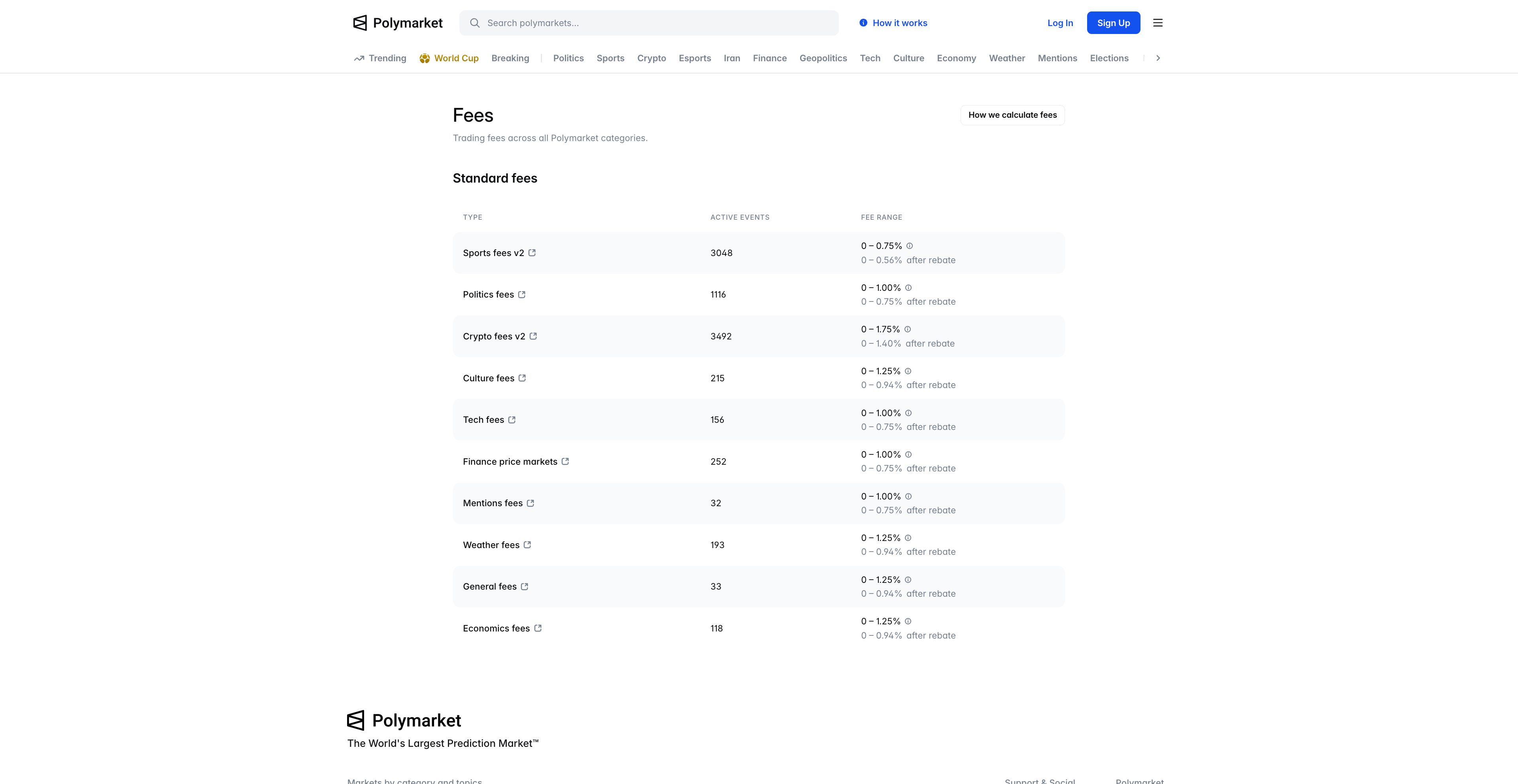
Both platforms take a cut, but they structure it differently. Kalshi charges trading fees based on contract price and volume, disclosed per-market. Polymarket's fee model has shifted over time and can vary by market maker incentives. Fees matter more if you're a frequent or high-volume trader — for occasional traders the difference is usually marginal compared to spread costs.
Market variety
Polymarket tends to list a wider range of niche and international markets — crypto prices, geopolitical events, entertainment outcomes — faster than Kalshi, partly because its on-chain structure makes launching new markets lower-friction. Kalshi's markets skew toward economic indicators, elections, and increasingly sports, reflecting its regulated-exchange positioning and the kinds of contracts the CFTC has approved.
Which one should you actually use?
If you're a U.S. resident who wants a regulated, brokerage-style experience, Kalshi is the more straightforward option. If you want the widest market selection and don't mind trading on-chain with USDC, Polymarket is the deeper pool. Many active traders end up using both, arbitraging price differences between the two when the same event is listed on both platforms.
Copying top traders instead of picking one platform
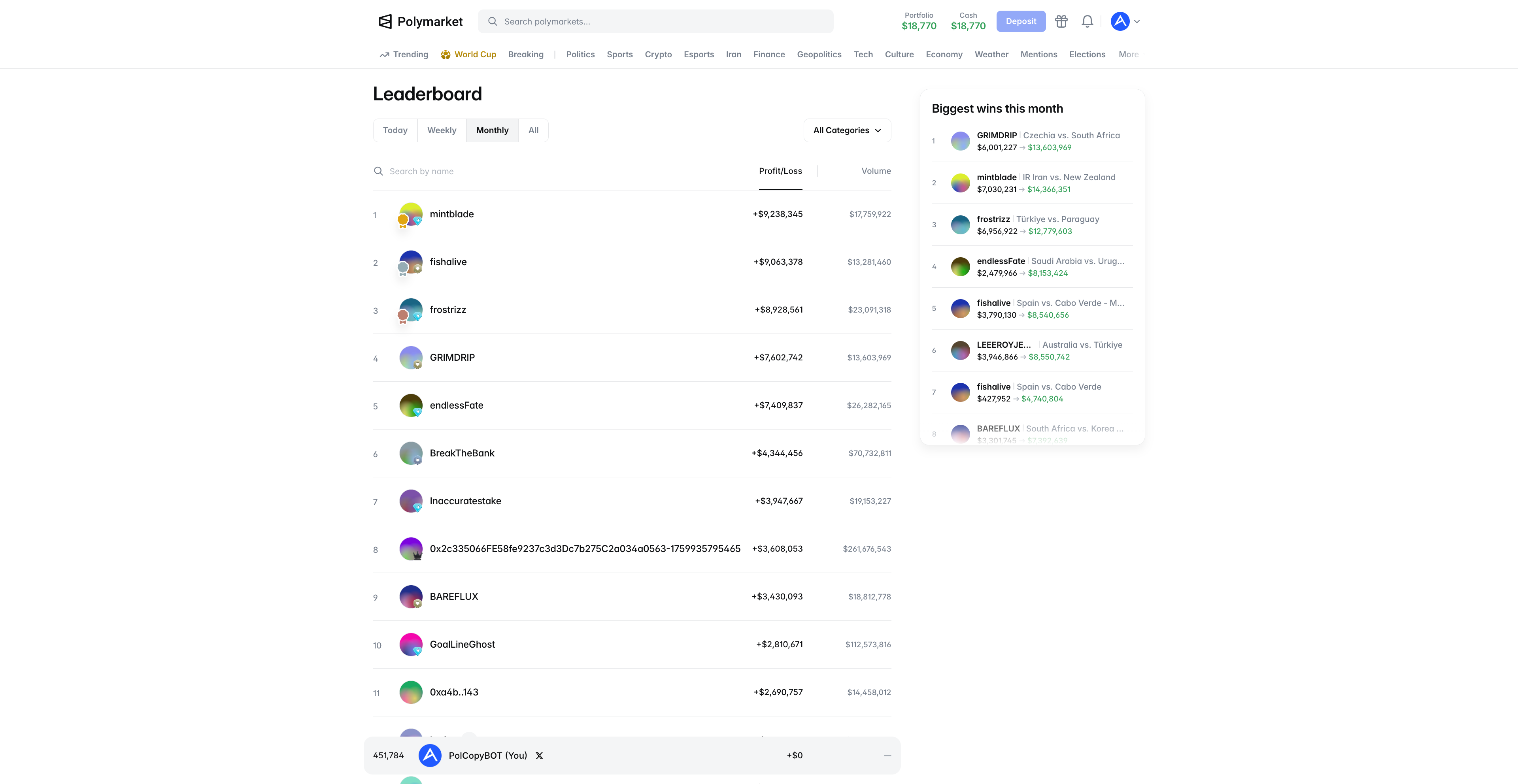
Rather than trying to out-guess either market on your own, some traders copy the wallets of consistently profitable Polymarket traders directly. polymarket.com publishes on-chain data by design — every trade is visible — which is what makes copy trading possible in the first place. PolyCop's leaderboard tracks these wallets by win rate and realized PNL, so you can see who's actually profitable before deciding whose trades to follow.
Bottom line
Kalshi and Polymarket aren't really competitors in the traditional sense — they're two different on-ramps into the same idea: trading on real-world outcomes. Your choice depends on regulatory access, the markets you care about, and whether you'd rather trade manually or copy proven wallets.
---
Ready to see who's actually winning on Polymarket? Check the leaderboard and start copy trading with the PolyCop Bot.